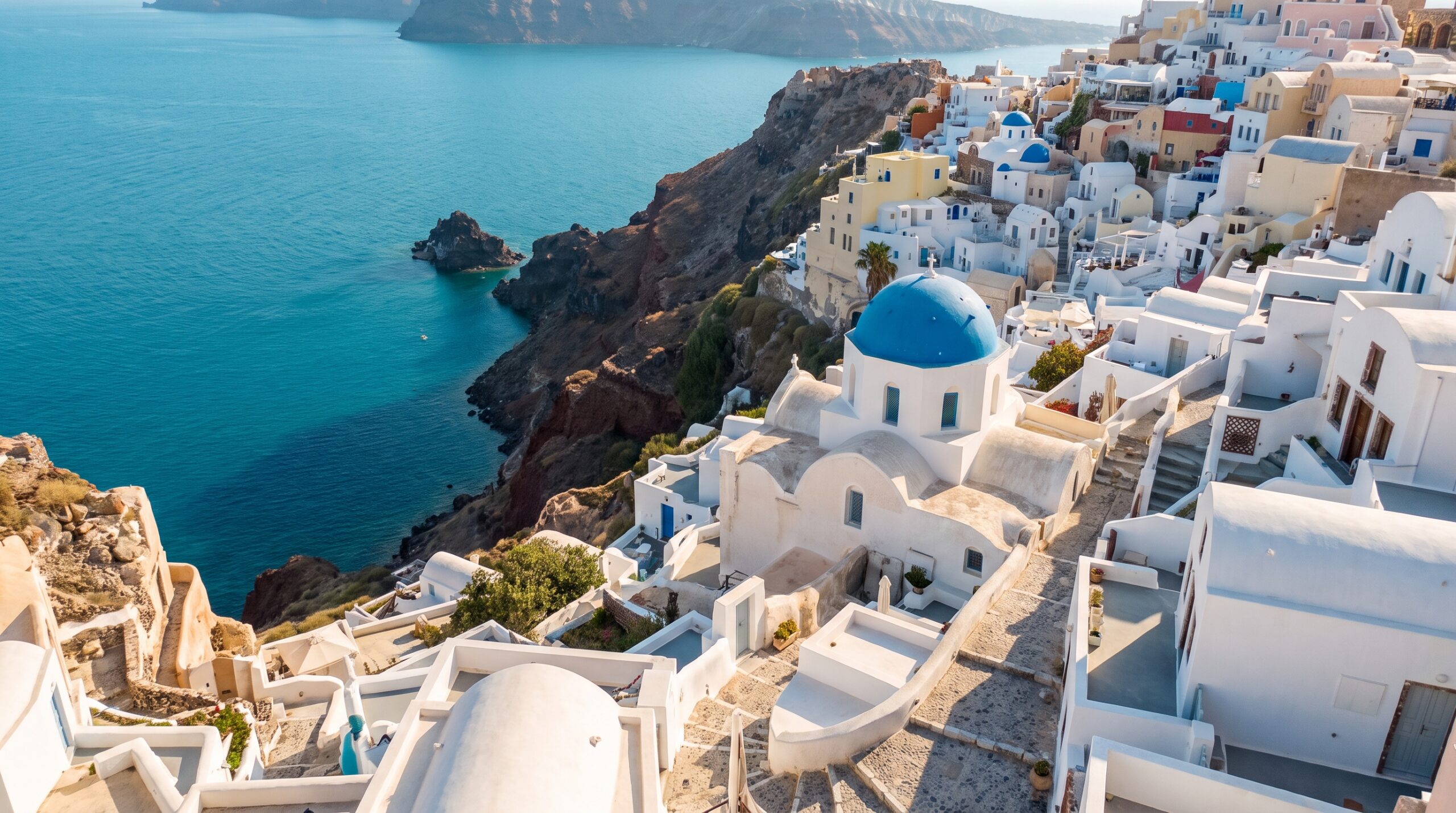
There is no best Greek island, only the right island for a specific trip type. Santorini dominates the search results, but travelers who default to it without matching their trip profile to the island’s actual strengths often leave disappointed. This guide sorts the major Greek islands by what kind of trip you are actually taking, using Santorini as the comparison anchor it has become, and identifies which island fits each trip type better than Santorini does.
The Greek island market is large enough that a traveler could return every summer for a decade and still have unexplored options. But that variety creates a matching problem: the island that works for a couple on a five-night anniversary trip is rarely the same island that works for a family with young children or a solo traveler looking for hiking and empty beaches. Santorini, for all its fame, is the right answer for only one or two of these trip types. The challenge is knowing which ones.
Santorini as the Comparison Anchor
Santorini earns its reputation on one dimension: visual drama. The caldera view, the cliffside towns of Oia and Fira, and the sunset over the volcanic crater are genuinely singular. No other Greek island produces the same aesthetic. But Santorini is expensive, crowded for most of the season, and limited in what it offers beyond the view. We covered the overtourism dynamic in detail in Santorini in 2026: The Overtourism Reality; the short version is that July and August on Santorini now exceed the island’s physical and logistical capacity. The beaches are volcanic black sand, not the white-sand crescent bays most travelers picture when they think of a Greek island. The hiking is limited to the Fira-to-Oia caldera trail, which is scenic but short and heavily trafficked. The food scene is fine but not a reason to choose Santorini over Crete or Naxos. The nightlife exists but is mild compared to Mykonos or Ios.
The traveler who should actually choose Santorini is narrow: someone whose trip priority is a dramatic landscape for photographs and a luxury hotel with a caldera view, who has at least three nights, who is not traveling on a tight budget, and who is comfortable sharing the experience with large crowds. For most other trip types, a different island delivers more of what the traveler actually wants, often at a lower cost and with fewer people.
How to Read the Islands by Trip Type
The sections below match islands to trip profiles. An island may appear in more than one section if it serves multiple trip types well. The island descriptions focus on durable character: what the island feels like, who it suits, and what it costs relative to its peers. Ferry schedules and specific hotel recommendations are excluded because they change too frequently to serve as reliable guidance beyond the current season.
For Couples and Romance
Milos is the strongest alternative to Santorini for couples. The coastline is more varied, with white rock formations at Sarakiniko, sea caves at Kleftiko accessible only by boat, and dozens of small coves that feel private even in August. The sunset at Plaka is nearly as good as Santorini’s, and the town itself is quieter and more authentic. Hotels are significantly less expensive than equivalent properties on Santorini, and the island remains under-discovered relative to its quality, though that window is closing. For a different island-comparison framework that weighs value against exclusivity, our Maldives vs. French Polynesia analysis uses a similar methodology.
Folegandros works for couples who want Santorini’s cliff town aesthetic without the crowds. The main village of Chora sits on a cliff edge with a view that rivals Oia, and the island has fewer than 800 permanent residents, which keeps the visitor volume manageable. It is not a beach island; the draw is the town, the walks, and the restaurants.
Hydra is the choice for couples who want a car-free, sophisticated short stay. No motor vehicles are allowed on the island, which produces a quiet that no other Greek island can match. The harbor town is polished and expensive, and the swimming is from rock platforms rather than sand beaches. Hydra works best as a two-to-three-night component of an Athens-plus-islands itinerary.
For Beaches
Crete has the best beaches in Greece by a wide margin. Elafonissi, Balos, and Falassarna on the west coast are world-class, and the south coast beaches around Matala and Preveli offer variety that no Cycladic island can match. Crete is large enough that a traveler needs a car and a minimum of five days to do the beaches justice, but for a beach-first trip, no other Greek island competes.
Naxos is the best beach island in the Cyclades. Agios Prokopios and Plaka are long, sandy, and backed by enough tavernas and beach bars to support full days without leaving the sand. Naxos is also more affordable than Mykonos or Santorini and works well for families who want a beach holiday with a real town attached.
Paros offers a balance of good beaches and good towns. Naoussa is a prettier fishing village than anything on Naxos, and the beaches at Kolymbithres and Santa Maria are strong. Paros skews slightly younger and trendier than Naxos, and it is the better choice for travelers who want beach days followed by stylish dinners rather than taverna meals.
For Food
Crete is the best food island in Greece and probably the eastern Mediterranean. The Cretan diet, heavy on olive oil, wild greens, local cheese, and lamb, is well-documented as one of the healthiest eating patterns in the world, but the practical reality is simpler: the baseline quality of a random taverna in a Cretan village is higher than the baseline anywhere else in Greece. For a food-first trip, base in Chania or Rethymno and rent a car.
Naxos is the best food island in the Cyclades. The island’s agricultural interior produces cheese, potatoes, and livestock that supply the tavernas directly. The mountain villages of Apeiranthos and Filoti have restaurants that serve food closer to a family kitchen than a commercial operation.
Sifnos has an outsized culinary reputation for an island its size, anchored by the legacy of the Greek chef Nikolaos Tselementes. The ceramic cooking vessels and the chickpea stew (revithada) baked overnight in wood ovens are specific to the island, and the restaurant density relative to population is the highest in the Cyclades.
For Hiking and Outdoors
Crete again. The Samaria Gorge is the headline hike, a 16-kilometer descent through one of Europe’s longest gorges, but the island has dozens of other routes through the White Mountains, the Psiloritis range, and the coastal paths on the south coast. A hiker could spend two weeks in Crete and not exhaust the options.
Andros is the best hiking island in the Cyclades, with a network of restored stone paths that cross the island’s green interior. Unlike the volcanic, arid landscape of Santorini or the scrub-covered hills of most Cycladic islands, Andros is lush, with streams and waterfalls that feel more like mainland Greece than the Aegean.
Amorgos offers dramatic coastal hiking with fewer people than any of the above. The path along the cliffs to the Monastery of Hozoviotissa is the signature walk, and the island’s isolation keeps visitor numbers low even in July and August.
For Nightlife
Mykonos is the answer and requires no elaboration. The beach clubs at Paradise and Super Paradise, the bars in Mykonos Town, and the general density of nightlife options are unmatched in the Cyclades. The tradeoffs are equally well-known: prices are the highest in Greece, crowding in July and August is extreme, and anyone not interested in the nightlife scene will find the island overpriced and underwhelming relative to alternatives.
Ios is the budget alternative to Mykonos, with a younger crowd and a more backpacker-oriented scene. It works for travelers in their twenties who want the party without the Mykonos price tag, but it does not offer much beyond nightlife and a few decent beaches.
For Families
Naxos is the best family island. The beaches are shallow and safe for children, the main town of Chora has enough restaurants and shops to keep evenings interesting, and the island is large enough to support day trips to mountain villages and archaeological sites. Accommodation is more affordable than on Paros or Mykonos, and the island is served by both ferries and flights.
Crete works for families with a car and at least a week. The range of activities (beaches, hikes, ruins at Knossos, water parks, boat trips) exceeds what any Cycladic island can offer. The tradeoff is scale: Crete requires more planning and more driving than a smaller island, and a four-night stay is insufficient.
Corfu is the best family island in the Ionian Sea. The east coast beaches are shallow and calm, Corfu Town is one of the most beautiful towns in Greece, and the island’s Venetian and British history gives it a different architectural feel from the whitewashed Cyclades. It is also reachable by direct flights from most European cities, avoiding the Athens connection that many Cycladic itineraries require.
For First-Timers
Naxos or Paros are the right starting points for a traveler who has never been to the Greek islands. Both offer the Cycladic aesthetic (whitewashed villages, blue-domed churches, good beaches, decent food) at a lower cost and with fewer crowds than Santorini or Mykonos. A traveler who starts with Naxos or Paros can then decide whether they want more of the same (move up to Milos or Folegandros) or something completely different (move on to Crete or the Ionian islands).
Starting with Santorini as a first Greek island is, counterintuitively, a mistake for many travelers. It sets an unrealistic visual baseline, making every other island feel like a downgrade on aesthetics even when the other island is superior on every other dimension. Santorini is better appreciated as a second or third Greek island visit, after the traveler has enough context to understand what makes it unique and what it lacks.
For Longer Stays
Crete is the only Greek island that can support a two-week stay without repetition. The island divides naturally into four regions (Chania, Rethymno, Heraklion, Lasithi), each with distinct geography, food, and character. A two-week itinerary that moves west to east across Crete feels like visiting four different places rather than stretching one place beyond its natural length.
Rhodes is the second-best long-stay option. The Old Town is a UNESCO site and one of the best-preserved medieval towns in Europe, the beaches on the east coast are good, and the interior has villages and castles that most visitors to Rhodes never see because they stay within walking distance of their resort. A week on Rhodes with a rental car is a fuller experience than a week on any single Cycladic island except Crete.
Verdict
Santorini is the right island for exactly one trip type: when the view matters more than anything else. For couples on a short luxury trip who want the caldera photograph and the cliffside sunset dinner, Santorini delivers. For every other trip profile, a different island delivers more of what the traveler actually wants. The same trip-type-first logic applies beyond the Mediterranean: our Bali in 2026: Timing and True Costs guide walks through a similar filter for that market.
Naxos is the most versatile island in the Cyclades. It covers beaches, food, families, and first-timers better than Santorini, Mykonos, or Paros, and it does so at a lower price. The tradeoff is that Naxos lacks a signature visual hook: there is no caldera, no iconic windmill row, no harbor town as refined as Naoussa. It wins on substance, not on postcard value.
Crete is the best Greek island overall if the traveler has at least a week and is willing to rent a car. It wins on beaches, food, hiking, and depth, and it loses only on the compact, walkable intimacy that makes the Cycladic islands satisfying for short stays. A traveler who can only visit one Greek island and has a week should choose Crete.
Milos is the smart alternative to Santorini for couples. The coastline is more interesting, the hotels cost less, and the island has not yet tipped into the self-parodying tourism density that now defines Santorini in July and August. The window is narrowing as Milos gains visibility, but for now it remains the right recommendation for most travelers who think they want Santorini.
FAQ
Q: How many islands can I see in one week?
A: Two, and only if they are close together. A common mistake is trying to visit three or more Cycladic islands in a week, which burns half a day per ferry transfer and leaves each island feeling rushed. A good one-week split is Naxos (4 nights) plus Paros (3 nights), or Milos (4 nights) plus Folegandros (3 nights). Add a third island only if the trip is at least 10 days.
Q: Is Santorini worth it if I am not staying in a caldera-view hotel?
A: Probably not. The caldera view is the reason to pay the Santorini premium. A traveler who books a cheaper hotel inland saves money but gives up the one thing Santorini offers that other islands cannot. At that point, a mid-range hotel on Milos or Naxos with a sea view costs less and provides a better overall experience.
Q: Which islands are reachable by direct flight from the US or Asia?
A: None. All Greek island flights from outside Europe require a connection in Athens, and on some smaller islands, a ferry from Athens as well. The only islands with direct flights from major European cities are Crete (Heraklion and Chania), Rhodes, Corfu, Mykonos, and Santorini. For any smaller island, budget at least a half-day for the Athens-to-island transfer.
Q: Does it matter which order I visit the islands?
A: Yes. Start with the quieter, less dramatic island and end with the more visually striking one. A trip that begins on Santorini and moves to Naxos will feel like a downgrade even if Naxos is objectively better on most dimensions. Begin on Naxos or Paros and end on Milos or Santorini, and the trip builds rather than fades.