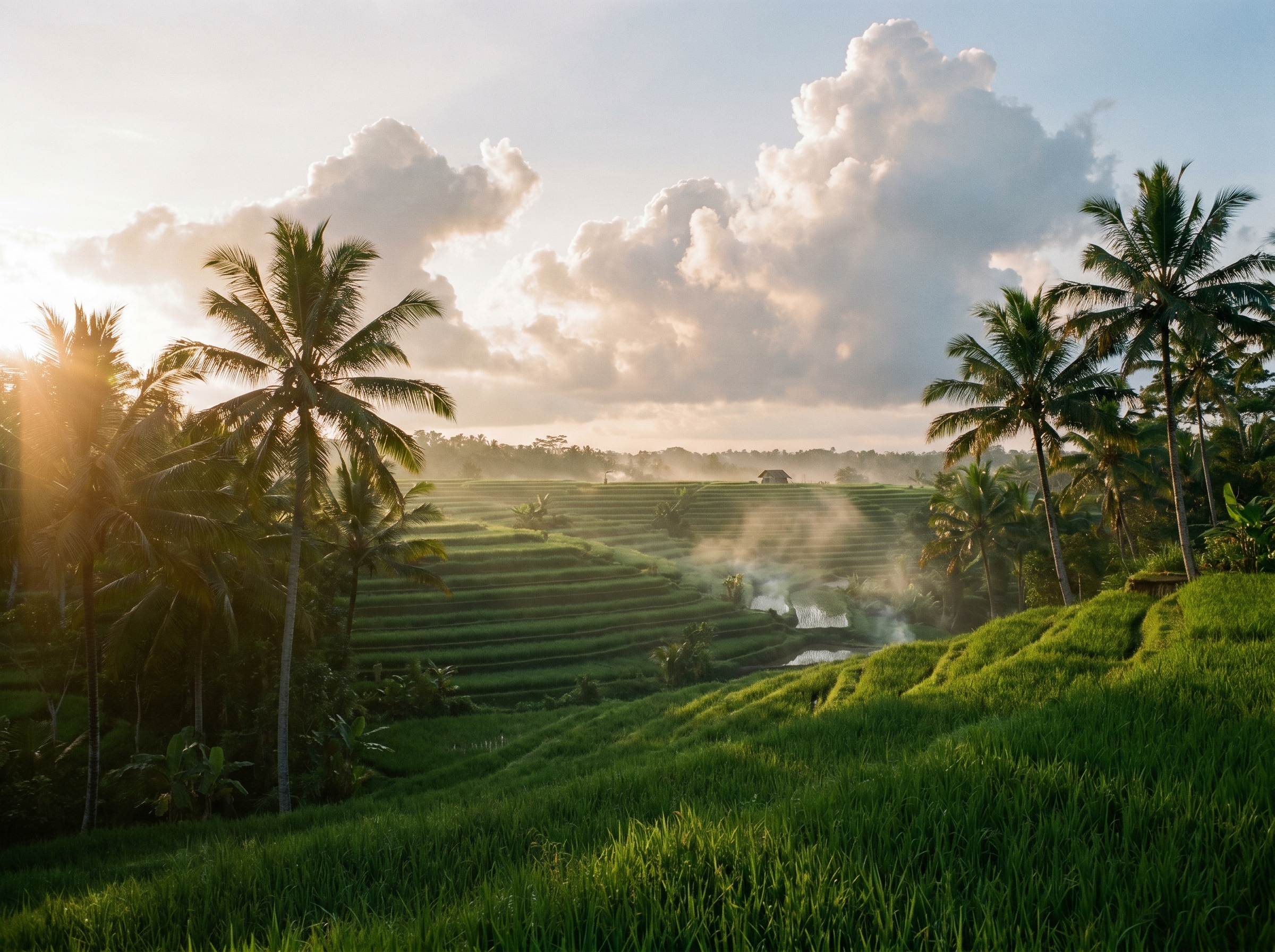
Bali in 2026 is still worth visiting, but the trip you get depends entirely on when you go and where you base. Go in May or September and stay in the right neighborhood, and the island delivers a combination of natural beauty, cultural depth, and value that few destinations match. Go in July or August and stay in Canggu or Seminyak, and you will spend more money for an experience that feels like a crowded commuter suburb with better sunsets. The island has not been ruined, but the gap between the best and worst times to visit has widened to the point where timing is the single largest variable in whether a Bali trip succeeds.
This piece explains what has changed in Bali’s tourism landscape since the post-pandemic reopening, what you will actually pay for entry, accommodation, and daily expenses in 2026, and how to calibrate your visit so the island you experience matches the one you are picturing.
Entry Costs and New Bureaucracy
Visiting Bali in 2026 means paying two separate fees at the border. The Indonesian visa on arrival costs approximately $35 USD, depending on your nationality, and is managed by the national immigration authority. Bali’s provincial tourist levy, introduced in February 2024, adds IDR 150,000 (roughly $10 USD) per person. You pay it once per stay through the Love Bali system, and you need the QR code receipt to clear the airport. The two fees are separate. Both are required.
The total entry cost of roughly $45 per person is not prohibitive, but it is a new layer of friction for a destination that once felt effortless to enter. The official payment portal works, though third-party “visa agent” sites charge inflated fees for the same service. Use only the official Indonesian immigration portal for the VOA and the official Love Bali site for the levy. Anything else is a markup with no added value.
Beyond the fees, Bali’s provincial government is reviewing a proof-of-funds regulation that would require foreign tourists to disclose bank account balances and submit a detailed itinerary. The policy is squarely aimed at long-term budget travelers and digital nomads who the government argues place disproportionate strain on public resources while contributing less per visitor than short-term resort guests. Whether the regulation materializes in its proposed form is uncertain, but the direction of travel is clear: Bali wants fewer long-stay budget visitors and more high-spend short-stay tourists. The entry process may get stricter before it gets simpler.
The Seasonality Split
Bali has two seasons whose significance is overstated, and one seasonal pattern that matters far more than most visitors realize.
The dry season runs from April through October. The wet season runs from November through March. But “wet season” does not mean all-day rain. It means afternoon downpours lasting one to two hours, usually followed by clearing skies. Temperatures hover between 27 and 33 degrees Celsius year-round. The weather difference between seasons is real but not dramatic. The crowd difference is dramatic.
Peak season (July, August, and the Christmas-to-New-Year window) brings hotel rates 30 to 60 percent above wet-season pricing, dinner reservations required everywhere, and 25-minute ride-share waits in the busiest neighborhoods. The popular Tegallalang rice terraces and Tirta Empul water temple run queue lines that did not exist a decade ago. The shoulder months of April, May, June, September, and October deliver dry-season weather without the peak-season volume. May and September in particular offer the best balance of conditions: reliably dry days, manageable crowds, and hotel rates closer to low-season levels.
The wet season (November through March, and especially January and February) brings the lowest prices and the smallest crowds. If you can tolerate the possibility of afternoon rain, it is the budget traveler’s window. The rain is rarely trip-ruining. The prices can be dramatically better.
Where You Stay Determines What You Get
Bali’s neighborhoods have diverged to the point where picking the wrong base can produce a fundamentally different trip than the one you intended.
Canggu and Seminyak are the epicenter of the island’s transformation. What were once quiet coastal villages with family compounds and small guesthouses have become dense zones of co-living spaces, boutique villas, and cafes serving oat-milk flat whites at Melbourne prices. The digital nomad economy has reshaped these areas around the needs and budgets of remote workers. A modest one-bedroom apartment in Canggu now rents for roughly $800 per month. Total monthly expenses for a comfortable lifestyle in the area run around $1,500. These neighborhoods are not bad, but they are not the Bali of the brochures. If you want that Bali, you need to look elsewhere.
Ubud remains the cultural heart, with rice terraces, temples, and an arts and wellness scene that predates the digital nomad wave. It has grown busier, but its core identity survives. The area around the Sacred Monkey Forest and the central market gets crowded by mid-morning, but the surrounding villages quiet down quickly once you leave the center.
Uluwatu and the Bukit Peninsula offer the best surfing and the most dramatic clifftop views. The area is less crowded than the southern beach towns but more spread out, requiring a scooter or car to get between beaches.
The north coast (Lovina, Pemuteran) and the east (Amed, Sidemen) remain genuinely quiet, with small-scale tourism, black-sand beaches, and a pace that has not changed much in twenty years. If the Bali you are looking for is the one that existed before the boom, start in the north or east and work down.
The Digital Nomad Effect
Bali’s popularity among remote workers is not a new story, but the local response to it is intensifying. The proof-of-funds regulation is one part of a broader government effort to shift the visitor mix toward higher-spending tourists. Local sentiment in the busiest neighborhoods has hardened: rising prices, competition for housing, and the visible transformation of traditional communities into expat lifestyle zones have generated real tension.
For short-term visitors, the practical impact is minimal. The resorts, restaurants, and services that cater to tourists operate normally. But if you are planning a longer stay, the regulatory environment is tightening, and the neighborhoods most associated with long-term remote work are the least likely to deliver the cultural experience that drew people to Bali in the first place.
The Cost Reality
Bali remains good value by Western standards, but the cheap-Bali narrative is outdated. A mid-range hotel in a popular area starts around $60 per night in dry season and can approach $120 at the higher end. A villa with a private pool ranges from roughly $150 to $300 per night depending on location, season, and amenities. Restaurant meals at decent sit-down places tend to run $10 to $20 per person. Street food and local warungs remain cheaper, typically $3 to $7 per meal.
A couple traveling comfortably should budget in the range of $150 to $250 per day during dry season, covering accommodation, meals, transport, and activities while staying in a mid-range property. That is excellent value for a tropical island destination with Bali’s infrastructure and variety. It is not the $40-per-day backpacker budget that some older travel content still references.
The Verdict
Bali in 2026 works best for travelers who prioritize timing and location. Go in May or September. Choose a base that matches the trip you want: Canggu or Seminyak for cafes, nightlife, and expat energy; Ubud for culture, wellness, and rice-terrace mornings; Uluwatu for surf and clifftop views; the north or east for the quiet Bali that most visitors assume still exists everywhere. Avoid July and August if you can, and avoid December-to-early-January for the same reason.
The island has changed. Some of the change is unwelcome, and some neighborhoods have lost their character. But the core reasons to visit, the geography, the culture, the temples, the food, and the genuinely warm hospitality that survives even in the busiest areas, remain intact. The trick is not to skip Bali. It is to visit it on the right terms.
Frequently Asked Questions
Q: What does it cost to enter Bali in 2026?
A: Two separate fees: a visa on arrival at approximately $35 USD, managed by Indonesian immigration, and the Bali provincial tourist levy of IDR 150,000 (roughly $10 USD), paid once per stay through the Love Bali system. Both are required. Use only the official government portals; third-party “visa agent” sites charge inflated fees for the same service.
Q: When is the best time to visit Bali?
A: May and September offer the best balance of dry-season weather, manageable crowds, and reasonable hotel rates. April and October are also good but less reliably dry. The worst time for crowds and prices is July and August, followed by the Christmas-to-New-Year window. The wet season (November through March) brings the lowest prices and the fewest tourists, with rain typically limited to afternoon showers of one to two hours.
Q: How much does a Bali trip actually cost in 2026?
A: A couple traveling comfortably should budget in the range of $150 to $250 per day during dry season, including mid-range accommodation, meals at sit-down restaurants, transport, and activities. Wet-season prices run roughly 30 percent lower. Villas with private pools range from roughly $150 to $300 per night depending on location and season. The $40-per-day backpacker budget some older content references is no longer realistic in popular areas.
Q: Is Bali still good for digital nomads?
A: Bali remains popular with remote workers, but the regulatory and cultural environment is shifting. The provincial government is reviewing proof-of-funds regulations aimed at long-term budget visitors. Neighborhoods like Canggu, once the center of digital nomad life, have grown more expensive and crowded, with monthly living costs around $1,500 for a comfortable lifestyle. Other Southeast Asian destinations with laxer visa enforcement are increasingly competitive. Bali still works for remote work, but it is no longer the obvious default.