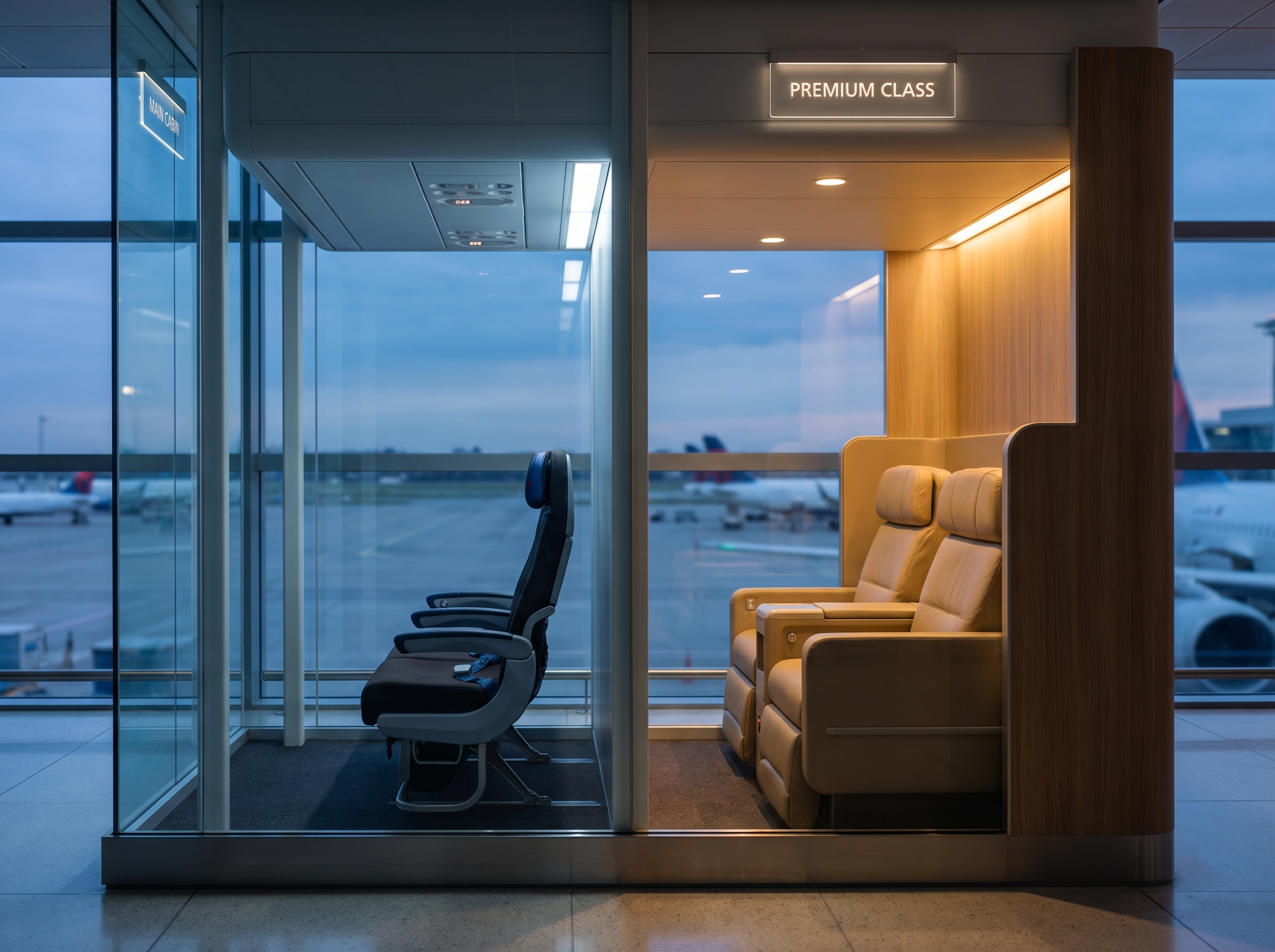
For most travelers on most routes, first class is not worth the premium over business class. The gap between the two cabins has narrowed on modern aircraft to the point where first class buys you a larger seat, a slightly better meal, and a more private boarding process. That is not enough to justify a fare that is often double or triple the business class price. But there are three specific scenarios where the math works, and those are the ones worth knowing.
The short version: first class makes sense when the flight exceeds 10 hours and the airline’s business class is below the category standard, when you are upgrading with miles rather than paying cash, or when the ground experience — lounge, terminal escort, arrivals facility — is materially different from what business class passengers receive. Outside those conditions, business class delivers 85 to 90 percent of the value at 40 to 60 percent of the cost.
This is not a cabin-by-cabin review. It is a decision framework for determining whether the upgrade premium clears your personal threshold, built around the variables that actually differentiate the two products.
What First Class Actually Adds Beyond Business Class
The physical differences have narrowed. On most airlines that operate both cabins, the first class seat is wider by roughly 4 to 8 inches and the bed extends 6 to 12 inches longer. The suite enclosure, if present, is more substantial. The in-flight dining is a step up in ingredients and presentation but follows the same multi-course structure. The wine list is longer.
The real differentiation lives in three areas that are harder to quantify:
Ground handling. First class passengers on a handful of airlines — Air France, Emirates, Lufthansa, Singapore Airlines, Swiss — receive a dedicated terminal or terminal-within-a-terminal experience: a private check-in entrance, a personal escort through security, and a first-class-only lounge or dining room inside the lounge. On Emirates and Lufthansa, the lounge includes a full restaurant with table service and, on Emirates, direct boarding from the lounge to the aircraft. Business class passengers on the same airlines receive a strong but shared lounge experience. The gap here is real and measurable.
Privacy and space control. The first class cabin on a typical 777 or A380 holds 6 to 14 seats. The business class cabin on the same aircraft holds 40 to 76. On a flight over 12 hours, the difference between sharing a space with 8 people and sharing it with 60 is categorical. First class passengers control their environment: when the suite door closes, the cabin essentially disappears. In business class, even with a privacy door, the density is higher and the cabin activity is more visible.
Cabin crew ratio. First class typically operates with a dedicated crew member for every 2 to 4 passengers. Business class ratios are closer to 1 crew member per 8 to 12 passengers. This translates to faster response times, more personalized service, and a higher likelihood that specific requests are accommodated without friction.
The Route Threshold: When First Class Makes Sense
First class value is route-dependent. The following thresholds are based on comparing the actual product gap across airlines at different flight durations.
Under 8 hours: First class is not worth it on any airline. The flight is too short for the extra space or service to produce meaningful additional rest or productivity. The ground experience is the only justification, and even the best first class lounge does not justify a $2,000-plus premium for a 7-hour flight. The premium over business class is better spent at the destination.
8 to 10 hours: Marginal. First class clears the bar only when the airline’s business class is notably below the category standard — for example, an airline still operating a 2-2-2 configuration with angled-flat seats in business while offering a modern suite in first. If business class is a fully flat, direct-aisle-access product, stick with business.
10 to 14 hours: The decision window. On flights this long, the cabin density difference, the meal service pace, and the ground experience start to matter. First class is worth considering when: the price premium is under 100 percent of the business class fare, the airline offers a genuine first class ground experience (not just a roped-off lounge section), or you are using miles at a favorable redemption rate.
Over 14 hours: First class becomes a defensible spend for travelers who can afford it. The sleep quality difference over 14-plus hours is real. A wider bed and a quieter cabin produce measurably better rest. The value here is in arriving functional rather than depleted. This is the threshold where first class stops being an indulgence and starts being a strategic decision about how you want to feel when the aircraft doors open.
For a deeper look at how specific business class products compare, see our breakdown of Emirates vs. Singapore Airlines Business Class. For what the Qatar Airways QSuites product actually delivers from a research-based perspective, see Qatar Airways QSuites: What the Award Reviews Don’t Tell You.
Airline-by-Airline Reality Check
Not all first class products are created equal. Some airlines operate a first class cabin that is barely distinguishable from a competitor’s business class. Others operate a product that genuinely defines its own category.
Where the gap is real: Emirates (A380 First Class suites and shower spa), Singapore Airlines (A380 Suites), Air France (La Premiere), Lufthansa (First Class Terminal in Frankfurt), and Swiss (First Class). These products offer a material step up in privacy, ground experience, and service density. The premium is high but the differentiation is real.
Where the gap is overstated: British Airways First (a slightly wider business class seat with a marginally better meal), Cathay Pacific First (as covered in Cathay Pacific First Class: Not Worth the Money Anymore), and most U.S. carriers that still operate a first class cabin on international routes. On these airlines, business class delivers nearly the same experience.
Where first class is the only meaningful premium cabin: A handful of airlines operate a strong first class product alongside a weak business class. These are the cases where the upgrade premium is easiest to justify. The 2-3-2 or 2-2-2 business class configurations that still exist on some fleets make first class the default choice for anyone who values privacy.
The Upgrade and Award Math
The cash premium for first class over business class on long-haul routes typically runs 80 to 200 percent. At those multiples, paying cash for first class is rarely justified by the product gap alone.
The miles math is different. First class awards typically cost 40 to 60 percent more miles than business class awards on the same route. At that ratio, using miles for first class is often the highest cents-per-mile redemption available — sometimes clearing 6 to 8 CPM when the cash fare would be $10,000 or more. This is the scenario where first class makes the most sense: booked with miles on an airline that operates a genuinely differentiated product on a flight over 10 hours.
Upgrade instruments — systemwide upgrades, upgrade certificates, and mileage upgrade awards — are the other path that closes the gap. When an upgrade from a paid business class fare to first class costs 25,000 to 50,000 miles or a single certificate, the math is straightforward. At those prices, the upgrade premium per hour is low enough to clear almost any traveler’s threshold.
Who First Class Is For
Travelers on flights over 10 hours who can book with miles at a favorable redemption rate, hold upgrade instruments that close the price gap, or value the ground experience and cabin privacy highly enough that the premium is not a meaningful budget constraint.
Who First Class Is Not For
Travelers whose route is under 8 hours, who are paying cash at full fare multiples, who are flying an airline where the first class product is only incrementally better than business class, or for whom the fare difference would meaningfully constrain spending at the destination.
Verdict
First class is worth it on flights over 10 hours when booked with miles, when upgraded from a paid business class fare using a certificate or moderate mileage supplement, or when flying an airline with a genuinely differentiated first class product (Emirates, Singapore Airlines, Air France, Lufthansa, Swiss). It is not worth paying cash at the full fare premium on any airline or route under 10 hours. The gap between the two cabins is real but narrow. On most flights, business class delivers the sleep, the privacy, and the ground experience that matters. First class adds polish. Whether polish is worth the price is the question only you can answer, but the variables that determine the answer are the ones laid out here.