Long-haul low-cost carriers save you real money — often 40-60% off legacy fares — but only if you travel light, pre-book every add-on at purchase, and accept that a missed connection on a self-transfer ticket is your problem, not the airline’s. The model rewards planning and punishes improvisation.
Norse Atlantic, Zipair, and French Bee represent the third wave of long-haul budget aviation: single-aisle efficiency applied to 787s and A350s crossing oceans. The base fares are genuinely low — Norse Atlantic one-ways from New York to London sometimes dip below $200, and Zipair flat-bed seats between Tokyo and Honolulu can cost a third of what JAL or ANA charge. But the model works differently from a legacy carrier, and booking one without understanding the unbundling mechanics is the fastest way to pay nearly full-service prices for a no-frills experience.
The Unbundled Model: What You Actually Get in the Base Fare
The base fare on a long-haul low-cost carrier covers a seat and one personal item (roughly 40x30x15 cm) under the seat. That is it. Everything else — carry-on bag, checked luggage, meals, water, seat selection, blanket — costs extra. The model is not deceptive. It is deliberately transparent in a way that legacy carriers are not. But the gap between the headline price and the all-in cost requires math.
A Norse Atlantic economy ticket from London to New York might show $189 at booking. Add one checked bag ($60), a seat selection ($28), and a meal bundle ($45), and the total is $322 — still cheaper than a $450 British Airways basic economy fare, but not the steal the $189 headline suggested. On Zipair, a Tokyo-to-Los Angeles flat seat — their “Full Flat” product, which is essentially a lie-flat business-class seat — can run $800-1,200 one-way, compared to $2,500-4,000 on JAL or ANA. That is not a small saving. It is a category shift. But the soft product — lounge access, meal quality, service frequency — is not competitive with legacy business class.
The Three Carriers: What Each Does Well
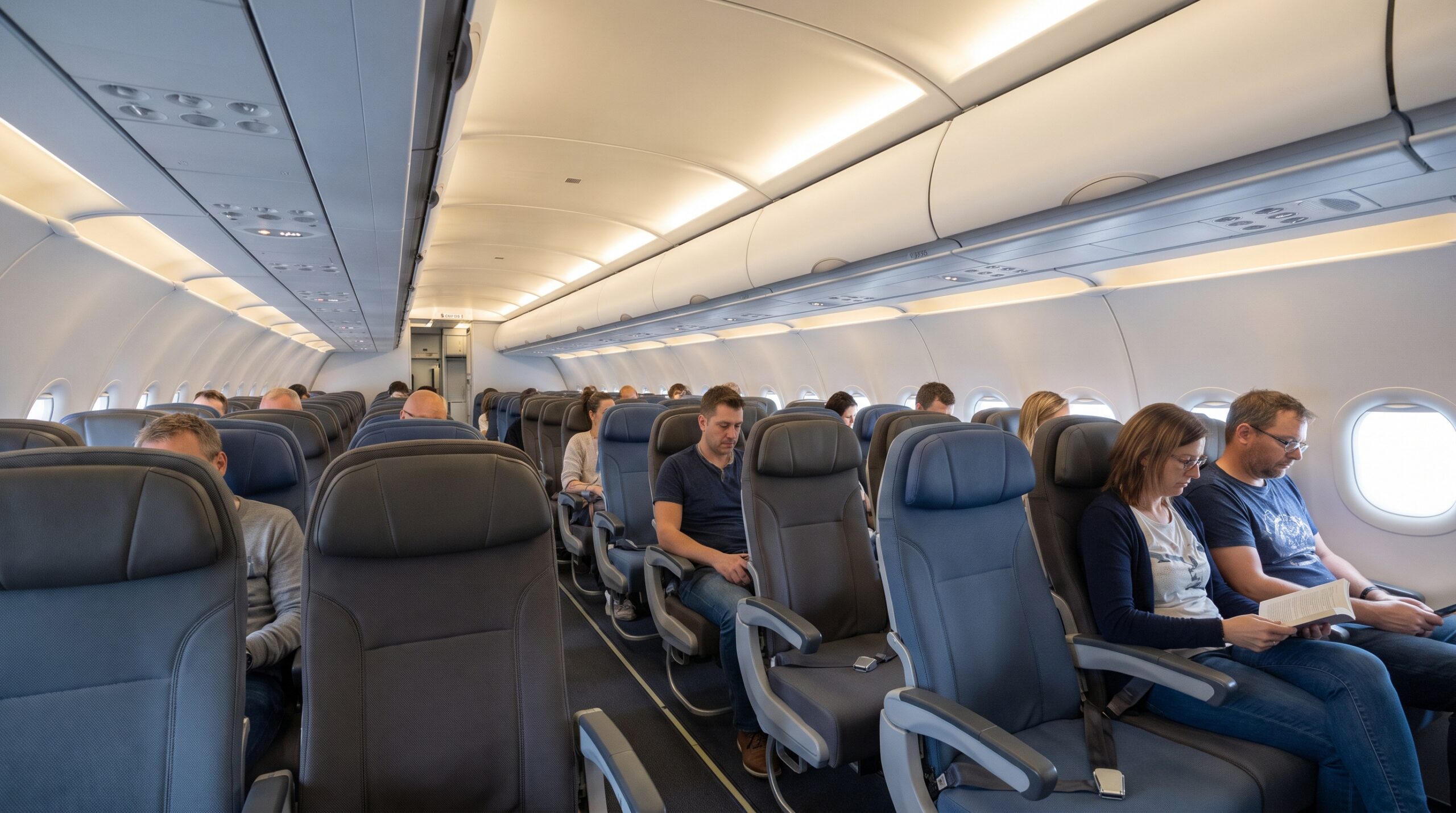
Norse Atlantic Airways (787-9, Atlantic routes): The most established of the three for transatlantic travel. Routes connect New York, Los Angeles, Miami, Orlando, and Bangkok to London, Paris, Berlin, and Oslo. The Premium cabin is the standout product: 43-46 inches of seat pitch, 2-3-2 configuration, two meals plus drinks included, and one checked bag built into the fare. Multiple 2025-2026 reviews call it one of the best premium economy hard products in the sky — more legroom than British Airways or Virgin Atlantic premium economy. The soft product lags: no WiFi, no lounge access, limited amenity kits. Premium fares range from $350-650 one-way on transatlantic routes. Economy is acceptable for daytime flights under 7 hours. For overnight 8+ hour flights, the 31-inch pitch and buy-on-board everything become fatiguing.
Zipair (787-8, Asia-Pacific/North America routes): JAL’s wholly-owned low-cost subsidiary operates between Tokyo Narita and Los Angeles, San Jose, Honolulu, Singapore, Bangkok, and Seoul. The differentiator is the Full Flat seat — a proper lie-flat business-class seat sold at roughly 60-70% below legacy business-class fares. A Tokyo-Los Angeles Full Flat seat can run $800-1,200 one-way. The catch: Zipair’s Full Flat does not include lounge access, premium ground services, or multi-course meal service. You are buying the seat, not the business-class package. For travelers who prioritize sleep over ceremony on transpacific routes, it is among the best value propositions in commercial aviation.
French Bee (A350, Paris to US/Polynesia): The smallest and most niche of the three, French Bee connects Paris Orly to Newark, Miami, San Francisco, and Papeete. The Premium Blue cabin is similar in concept to Norse Premium — wider seats, more pitch, better meals, priority boarding. French Bee’s unique value is the Paris-Tahiti route, where legacy fares can exceed $2,000 round-trip in economy and French Bee can deliver Premium Blue for under $1,500. For French Polynesia-bound travelers, it is the default budget option.
The Self-Transfer Trap
The single biggest risk with long-haul low-cost carriers is not the hard product. It is the booking model. Most low-cost carriers do not interline with other airlines. That means if you book Norse Atlantic from New York to London and then a separate easyJet ticket from London to Barcelona, the two airlines have no relationship. If Norse is delayed and you miss your easyJet flight, easyJet treats you as a no-show. Your onward ticket is cancelled. You buy a new one at walk-up prices.
This is not a secret. It is the single most important thing to understand before booking a long-haul low-cost carrier. If you need a connection beyond the low-cost carrier’s destination, either book it on the same reservation (where possible), budget a minimum 4-6 hours between separate tickets, or buy travel insurance with explicit self-transfer missed-connection coverage.
Checklist: Long-Haul Low-Cost Decision
- Compare the all-in price, not the base fare. Add bags, seat selection, and meals during booking — last-minute airport add-ons can triple the per-item cost.
- Norse Premium and Zipair Full Flat are the value sweet spots — excellent hard products at a fraction of legacy fares.
- Norse Economy is fine for daytime flights under 7 hours. Avoid for overnight long-haul unless you sleep easily upright.
- Self-transfers need 4-6 hours between separate tickets. Missed connections on separate tickets are your liability.
- None of these carriers offer loyalty programs, lounge access, or meaningful flexibility on change/cancel. The product is the seat and the schedule — nothing else.
- Check the equipment: all three carriers operate modern widebodies (787s, A350s). The hard product is competitive. The soft product — food, service, WiFi — is where the savings come from.
Verdict
Long-haul low-cost carriers are worth booking when the all-in price is 30%+ below the legacy equivalent, you travel light or pre-book add-ons, and you do not need a connection beyond the carrier’s destination. The Premium/Full Flat products on Norse and Zipair are genuine values — among the best dollar-per-comfort ratios in commercial aviation. Economy on overnight flights is a harder sell unless your budget is the primary constraint. The model works. It just does not forgive the unprepared.
FAQ
Q: Is Norse Atlantic safe?
A: Yes. Norse Atlantic is a Norwegian-registered airline operating under EU safety regulations. Its fleet is modern 787-9 Dreamliners. Safety is not a differentiator between low-cost and legacy carriers on regulated international routes.
Q: Can I earn miles on Norse, Zipair, or French Bee?
A: No. None of the three operate loyalty programs or belong to airline alliances. This is part of the cost structure that enables lower fares.
Q: What happens if my Norse flight is cancelled?
A: EU261 applies to Norse Atlantic as an EU-registered carrier. You are entitled to rebooking, meals, accommodation, and compensation (EUR 250-600) depending on delay length and cause. Zipair operates under Japanese regulations. French Bee operates under French/EU regulations.
Q: Is Zipair’s Full Flat actually lie-flat?
A: Yes. It is a proper 180-degree lie-flat seat — the same seat type you would find on JAL’s business class. The difference is the soft product, not the seat itself.