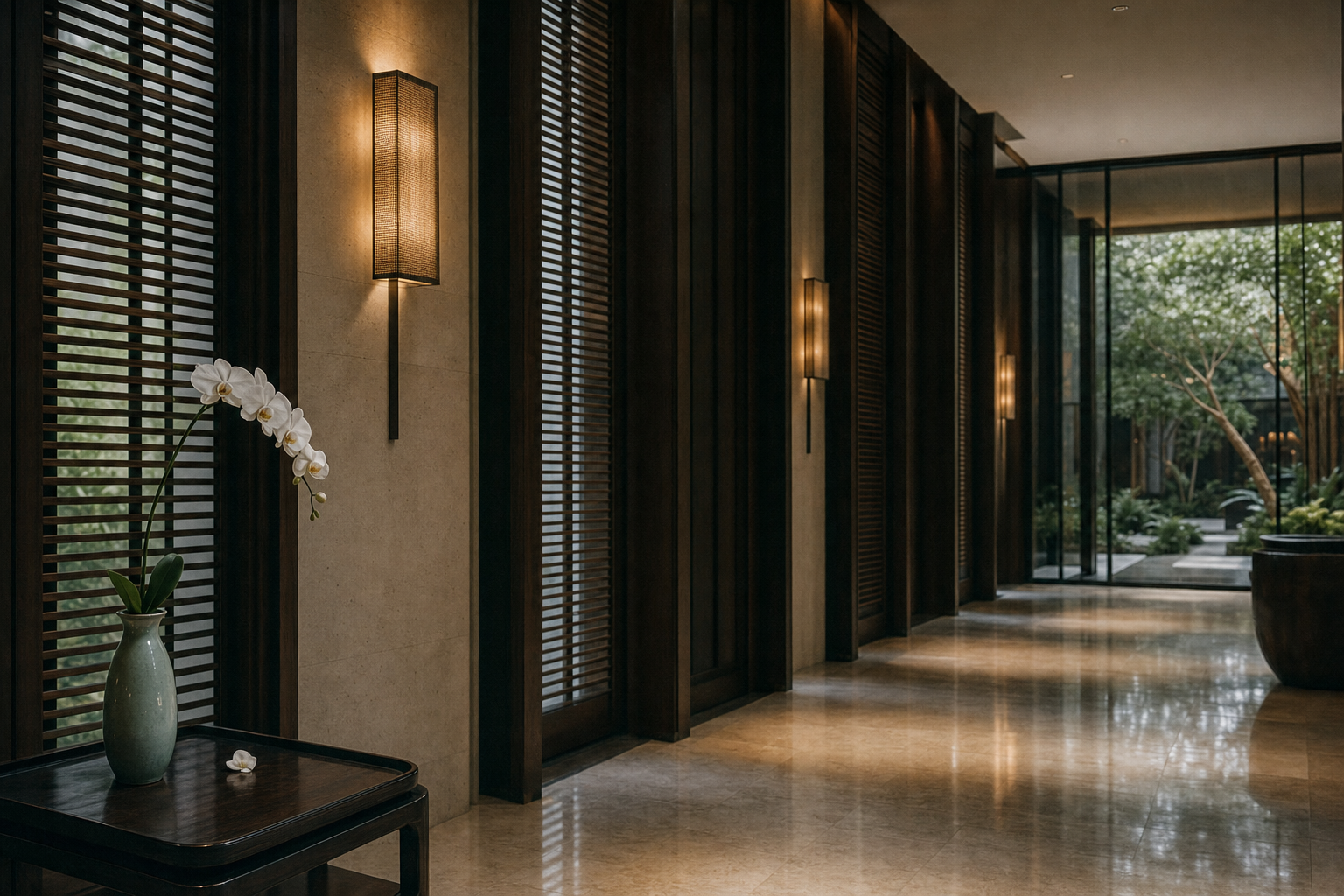
Both properties placed in the global top ten of The World’s 50 Best Hotels 2025. Choose Four Seasons for an integrated pool-and-wellness stay; choose Mandarin Oriental when heritage and its dining room are central to the trip. Compare equivalent rooms on your actual dates before paying a premium.
Research basis: Claims in this article are sourced from official hotel websites, The World’s 50 Best Hotels 2025 official list, Michelin Guide Thailand 2025, Gourmet Bangkok vs. Chiang Mai, Asia’s 50 Best Bars 2025, Booking.com verified guest scores, The Times, The Age, Near+Far Magazine, The Luxury Editor, and Kayak aggregated rates. Historical rate examples and rankings are dated in the text. Selected hotel-facility and MICHELIN claims were checked in October 2026. Rates fluctuate; verify directly before booking.
At a Glance
| Variable | Four Seasons Bangkok | Mandarin Oriental Bangkok |
|---|---|---|
| World’s 50 Best Hotels 2025 | #2 | #7 |
| Michelin Keys | 2 | 3 (highest tier) |
| Opened | 2020 | 1876 |
| Rooms / Suites | 299 rooms and suites | 331 total (three wings) |
| Entry room size | From 50 sqm | From ~43 sqm (Garden Wing) |
| Pools | Riverfront infinity pools, 35m lap pool and kids’ pool | 2 (riverside, no infinity) |
| F&B venues | 8 | 12 |
| Michelin dining | Yu Ting Yuan (MICHELIN-listed) | Anne-Sophie Pic at Le Normandie (2 stars) |
| Bar ranking | BKK Social Club #19 Asia’s 50 Best Bars 2025 | Bamboo Bar (est. 1953) |
| Spa | Urban Wellness Centre, 2,500+ sqm on-site | Teakwood mansion across the river (boat transfer) |
| Entry rate (approx.) | From ~$426–$450/night | From ~$416–$432/night |
| Best For | Amenity-forward stays, families, first-time Bangkok visitors | Heritage travelers, fine dining, honeymooners |
The Setup
Bangkok’s top-tier hotel market has no weak incumbents. The Four Seasons Hotel Bangkok at Chao Phraya River opened in late 2020, ranked #2 on The World’s 50 Best Hotels 2025 (per the World’s 50 Best Hotels official list, October 2025), and holds two Michelin Keys. The Mandarin Oriental, Bangkok — the city’s oldest five-star property, opened in 1876 — ranked #7 on the same list and holds three Michelin Keys, the highest designation awarded in the inaugural program.
Both properties sit on the Chao Phraya River in the Charoen Krung district, roughly 800 metres apart. The question is not which hotel is better in an abstract sense. The question is which one delivers more for the price you actually pay, under current market conditions, for a defined traveler type.
At comparable room rates, the Four Seasons is the stronger fit for travelers prioritizing integrated leisure facilities. The Mandarin Oriental remains the correct choice for a specific profile — and becomes genuinely competitive at rate parity. Both conditions are addressed directly below.
Four Seasons Bangkok: What Works
Infrastructure scale. Four Seasons lists riverfront infinity pools, a 35-metre lap pool and a dedicated kids’ pool. That combination gives swimmers, families and guests seeking a riverfront pool setting different facilities to use. Compare those facilities with the ones you will actually use, rather than choosing on pool count alone.
F&B depth and institutional recognition. The property’s dining program gives guests several reasons to stay on site. Yu Ting Yuan (MICHELIN-listed Cantonese restaurant) operates a glass-clad show kitchen with whole roasted ducks and live dim sum service. Palmier by Guillaume Galliot — the hotel’s French brasserie helmed by a chef who held three Michelin stars at Caprice in Hong Kong (per Near+Far Magazine review, November 2024) — provides elevated French-brasserie service at accessible price points. BKK Social Club ranked #19 on Asia’s 50 Best Bars 2025 (per the World’s 50 Best Hotels listing, October 2025). Riva del Fiume, the all-day Italian restaurant, handles breakfast and riverfront dining with consistent guest scores across aggregators.
Contemporary design at resort scale. Architect Jean-Michel Gathy designed a mid-rise complex of cascading buildings threaded through reflective pools and landscaped courtyards. The 299 rooms and suites (Four Seasons hotel facts) range from 50 sqm to suite configurations above 300 sqm. Floor-to-ceiling windows, automated blackout blinds, Byredo amenities, and twice-daily housekeeping are standard across categories (per The Luxury Editor review, July 2025). The Urban Wellness Centre spans over 2,500 square metres and includes a 35-metre lap pool, Muay Thai ring, aerial yoga studio, and spa (per Near+Far Magazine, November 2024).
Ranking trajectory. The property moved from #14 (World’s 50 Best Hotels 2024) to #2 (World’s 50 Best Hotels 2025), the largest single-year jump on the list. This is relevant to value assessment because institutional recognition at this level commands a price premium at competitors; here it arrives without one.
Four Seasons Bangkok: What Doesn’t Work
Location offset. The property sits in the Charoen Krung creative district, which is a genuine neighborhood with galleries, independent restaurants, and design studios. It is not, however, in the historic or commercial core of Bangkok. The Grand Palace is approximately 4.9 km by road (per the Four Seasons Bangkok website, April 2026). Guests who plan to explore the city extensively will spend meaningful time and expense on ground transport. The hotel’s complimentary shuttle boat connects to ICONSIAM mall and Saphan Taksin BTS station, which partially mitigates this — but only partially.
Heritage ceiling. The property opened in 2020. Its contemporary design and Thai cultural programming are executed at a high level, but guests seeking the institutional weight of a property with decades of layered history will not find it here. The sense of place is curated rather than accumulated.
Rate variability. Published rates for entry-level Deluxe rooms start around $426–$450 per night (per hotel-bangkok.info, March 2026; per World’s 50 Best Hotels 2025 listing). At peak Bangkok season (November–February), rates across categories move higher and the value calculation changes. Travelers booking at peak should confirm rates directly before drawing conclusions from this comparison.
Mandarin Oriental Bangkok: What Works
Institutional depth. The Mandarin Oriental, Bangkok opened as The Oriental in 1876 (per Mandarin Oriental press release, April 2025). Its three Michelin Keys — the highest tier in the Michelin Guide Thailand 2025 — reflect recognition of architecture, service consistency, personality, and character. Mandarin Oriental is one of Bangkok’s Three-MICHELIN-Key hotels. The hotel’s Author’s Wing, dating to 1876, features suites named after Joseph Conrad, Somerset Maugham, Noel Coward, and other writers who stayed. The physical fabric of the property carries a kind of weight that cannot be engineered into a new-build.
Dining program depth. The property operates 12 bars and restaurants (per Mandarin Oriental Bangkok FAQ, April 2026). Anne-Sophie Pic at Le Normandie — the reimagined flagship French restaurant — was awarded two Michelin Stars at the Michelin Guide Thailand Ceremony on 27 November 2025 (per Gourmet Bangkok, December 2025). Chef Pic, the world’s most Michelin-starred female chef (per Mandarin Oriental press release, April 2025), brought her “Suffusion” tasting menu philosophy to the restaurant following a complete redesign by Humbert & Poyet. Le Normandie has operated on this site since 1958. The Bamboo Bar — Bangkok’s first jazz venue, established 1953 (per Mandarin Oriental website, April 2026) — remains a reference-point institution for live jazz and cocktails in the region.
River position and spa. The hotel’s spa occupies a 100-year-old teakwood mansion across the Chao Phraya River, accessible by private hotel boat (per The Times review, April 2024). This is architecturally distinct from any other spa in Bangkok and represents a genuine differentiator. Two outdoor pools occupy a riverside position with direct water frontage. The hotel’s location in Bangkok’s historic Bang Rak district places it closer to the city’s original commercial and cultural core than the Four Seasons.
Service model. Multiple independent reviewers across 2024–2025 cite service consistency as the Mandarin Oriental’s most reliable differentiator. The Times gave food and drink 10/10 and facilities 10/10 (The Times, April 2024). Booking.com guest scoring (April 2026) records 9.7 for staff and 9.9 for comfort across 516 verified reviews. The butler-and-silk-sarong service model is the product of 150 years of institutional refinement, and guests report that it shows.
Mandarin Oriental Bangkok: What Doesn’t Work
Room scale and age. Entry-level rooms in the River Wing start at approximately 43 sqm (per Michelin Guide writer account, September 2024). The Garden Wing, built in 1958, carries period design that reads as dated in its less-renovated sections. While the River Wing received a USD $90 million renovation in 2019 (per The Age, April 2024), the property’s three-wing configuration means room quality is uneven depending on category and wing. Guests who do not specify wing and room type at booking risk meaningful variation in what they receive.
Pool configuration. Two outdoor pools are well-positioned but comparatively limited against the Four Seasons’ riverfront, lap-pool and kids’-pool facilities. Neither pool matches the scale or architectural impact of the Four Seasons’ infinity configuration. For guests whose stay centers on pool time, this is a material limitation.
Value for money scoring. On Booking.com, the Mandarin Oriental scores 8.5 for “value for money” — the lowest subcategory in its guest ratings (Booking.com, April 2026). This is consistent with the property’s published rate structure, which runs higher than the Four Seasons at comparable room categories.
Navigation and layout. The three-wing structure — Author’s Wing (1876), Garden Wing (1958), River Wing (1976/renovated 2019) — plus the cross-river spa and Sala Rim Naam restaurant means guests frequently take the hotel boat or navigate between buildings. For travelers who want a seamlessly integrated resort experience, this distributed layout is a friction point.
Best For / Not For
Four Seasons Bangkok — Best for:
- Amenity-forward travelers whose stay centers on pool, spa, and F&B access without leaving the property
- First-time Bangkok visitors who want a legible, resort-scale base without navigational complexity
- Travelers prioritizing contemporary design and ranked F&B (BKK Social Club and Yu Ting Yuan are among the most decorated in the city)
- Families: the property’s Kids Club, family pool, and courtyard configuration are better suited to multi-generational stays than the MO’s distributed layout
- Business travelers on extended stays who want Wellness Centre access integrated into the property
Four Seasons Bangkok — Not for:
- Travelers who define the value of a Bangkok stay partly through historical contact — the property’s design references Thai heritage but does not embody it
- Guests seeking the intimacy and quiet of a smaller-footprint property; at 299 rooms with a resort-scale F&B operation, this is a large, active hotel
Mandarin Oriental Bangkok — Best for:
- Travelers for whom the history of a property is itself part of the stay — the Author’s Suites, the Bamboo Bar, and the 1876 building are not decoration but substance
- Guests who prioritize fine dining at the highest category: Anne-Sophie Pic at Le Normandie is one of Bangkok’s two-MICHELIN-starred hotel restaurants
- Honeymooners and couples for whom the cross-river spa in a teakwood mansion, the butler service ratio, and the overall weight of the property create an experience the Four Seasons cannot replicate
- Travelers interested in Bangkok’s historic royal district and old city, who will benefit from the property’s closer geographic positioning
Mandarin Oriental Bangkok — Not for:
- Families who need a pool-forward, activity-integrated setup without cross-river logistics
- Travelers paying entry-level rates ($416–$430) who will receive Garden Wing rooms without guaranteed river views — the heritage proposition is diluted at the base category
- Guests whose daily routine centers on pool and spa use; the distributed layout and two-pool configuration are material limitations at this price tier
- Anyone who has not specified wing and room category at booking — the variation across three wings is significant
Value Threshold
At what rate difference should you book the Mandarin Oriental over the Four Seasons?
In the April 2026 rate examples, both properties’ entry-level pricing is effectively at parity: Four Seasons Deluxe rooms from approximately $426–$450 per night (per hotel-bangkok.info, March 2026; World’s 50 Best Hotels 2025 listing); Mandarin Oriental Deluxe rooms from approximately $416–$432 per night (per Kayak, April 2026). The Four Seasons’ published starting rate is marginally higher, but the gap is within normal booking-channel variance and should not be treated as a fixed differential.
At rate parity or within a $50/night band, the Mandarin Oriental’s three Michelin Keys, its two-Michelin-Star dining room, its 150-year service tradition, and its World’s 50 Best Hotels #7 global ranking make it the correct choice for travelers who qualify under the “Best for” criteria above. The institutional weight is a real amenity and, at parity pricing, it is not being charged for at a premium.
The Mandarin Oriental’s suite categories begin meaningfully higher — from approximately THB 41,650/night (roughly $1,150–$1,170 at current exchange rates, per The Age conversion reference, April 2024) — versus Four Seasons suite entry at comparable configuration. When the Mandarin Oriental’s room-category pricing climbs above the Four Seasons’ equivalent category by more than $100/night, the amenity-per-dollar math favors the Four Seasons for the majority of non-heritage traveler profiles.
Is the Mandarin Oriental Bangkok’s Garden Wing worth booking? No. Garden Wing rooms (1958, partially renovated) do not deliver the heritage or the contemporary finish that justify the brand’s premium. The wing’s period design reads as dated in its less-renovated sections, and the experience it provides is inconsistent with the institutional weight the Mandarin Oriental charges for. Travelers who cannot confirm a River Wing or Author’s Wing booking at their rate point should default to the Four Seasons without hesitation.
The MO’s value case is strongest at mid-tier suite level. The River Wing suites (renovated 2019 at cost of USD $90 million, per The Age, April 2024) — with balconies, river views, butler service, and direct access to the Bamboo Bar and Author’s Lounge — represent the Mandarin Oriental’s strongest value proposition. At this category, the differentiation from the Four Seasons is clearest and the rate premium most justified.
Verdict
At comparable room rates, Four Seasons Bangkok is the stronger choice for a pool-and-wellness-focused stay. Its integrated facilities and contemporary design are the reasons to book it. The World’s 50 Best Hotels 2025 placed it at #2, but that historical ranking is not a substitute for checking your room category, rate and priorities.
The Mandarin Oriental, Bangkok earns its three Michelin Keys and its #7 global ranking. Its service tradition is real, its dining room (Anne-Sophie Pic at Le Normandie with two Michelin Stars) is one of Bangkok’s two-MICHELIN-starred hotel restaurants, and the teakwood spa across the river is not replicated anywhere in the city. For the traveler who specifically wants the weight of a 150-year institution — the Bamboo Bar, the Author’s Suites, the sense of accumulated history — the Mandarin Oriental is the correct choice, and at rate parity it earns that selection on merit.
But at any rate premium above approximately $100/night over the Four Seasons equivalent, the heritage proposition has to carry the full load of that delta. For most travelers, it cannot.
Book the Four Seasons if you are optimizing for what happens during your stay. Book the Mandarin Oriental — and specify the River Wing — if the property itself is part of what you are there to experience.
Frequently Asked Questions
Which property has better dining?
By number of venues, the Mandarin Oriental (12 bars and restaurants, per Mandarin Oriental FAQ, April 2026) leads the Four Seasons (8 dining venues, per Four Seasons Bangkok website, April 2026). By Michelin designation, the MO’s Anne-Sophie Pic at Le Normandie holds two Michelin Stars (awarded November 2025), while the Four Seasons’ Yu Ting Yuan is MICHELIN-listed without a star designation in the current listing. The BKK Social Club at the Four Seasons ranks #19 on Asia’s 50 Best Bars 2025 — the most prominent single-venue bar ranking held by either property. Both programs are substantive; the MO edges on fine-dining pedigree, the Four Seasons on the bar program.
Which pool is better?
Four Seasons offers riverfront infinity pools, a 35-metre lap pool and a dedicated kids’ pool. Mandarin Oriental has riverside pools. Choose Four Seasons when lap swimming, children’s facilities and an integrated pool-focused stay are priorities; choose the hotel around your actual use rather than the pool count.
Is the Mandarin Oriental’s spa worth the extra trip across the river?
For spa-focused travelers, yes. The Oriental Spa occupies a 100-year-old teakwood mansion on the opposite bank, accessible via the hotel’s private boat (per The Times, April 2024). The setting is architecturally distinct from any other hotel spa in Bangkok. The Four Seasons’ Urban Wellness Centre is larger and more comprehensive on-site, but lacks the heritage setting. If the spa is a primary driver of your stay, the Mandarin Oriental’s offering is harder to replicate.
What is the rate difference between the two properties?
In the April 2026 rate examples, both properties’ entry-level Deluxe rooms are priced within a narrow band: the Four Seasons from approximately $426–$450/night, the Mandarin Oriental from approximately $416–$432/night (per Kayak, hotel-bangkok.info, April 2026). Rate parity at this level is common on OTAs. Always check both properties’ direct booking pages and third-party aggregators before drawing conclusions.
Do I need to specify a room wing at the Mandarin Oriental?
Yes. The property spans three wings: the Author’s Wing (1876 original building), the Garden Wing (1958, partially renovated), and the River Wing (1976, renovated 2019 at a cost of USD $90 million, per The Age, April 2024). Room quality varies materially across wings. The Garden Wing at base-category rates does not deliver the experience the brand implies. Specify the River Wing, minimum, at booking. If you cannot confirm it at your rate point, consider whether the Four Seasons is a more consistent choice.
How does the White Lotus effect factor in?
The Mandarin Oriental Bangkok appeared in HBO’s The White Lotus Season 3, which increased booking demand and brand visibility in 2025. Both properties have seen demand uplift from the show’s Bangkok-set season, but the MO’s direct association carries more booking-intent weight among a specific demographic. This has no bearing on the quality of a stay but does affect availability and, occasionally, rate floors during peak periods.
Which property is better for business travel?
The Four Seasons has a slight edge: its Urban Wellness Centre, integrated facilities, and resort-scale room configuration make it more functional as an extended business base. The Mandarin Oriental’s distributed layout — cross-river spa, multiple buildings, boat transfers — adds friction to high-frequency work-and-recover routines. Both properties have business centre facilities and multilingual staff (per both properties’ official websites, April 2026).
Rates, rankings, and programme details are subject to change. Verify directly with each property before booking.