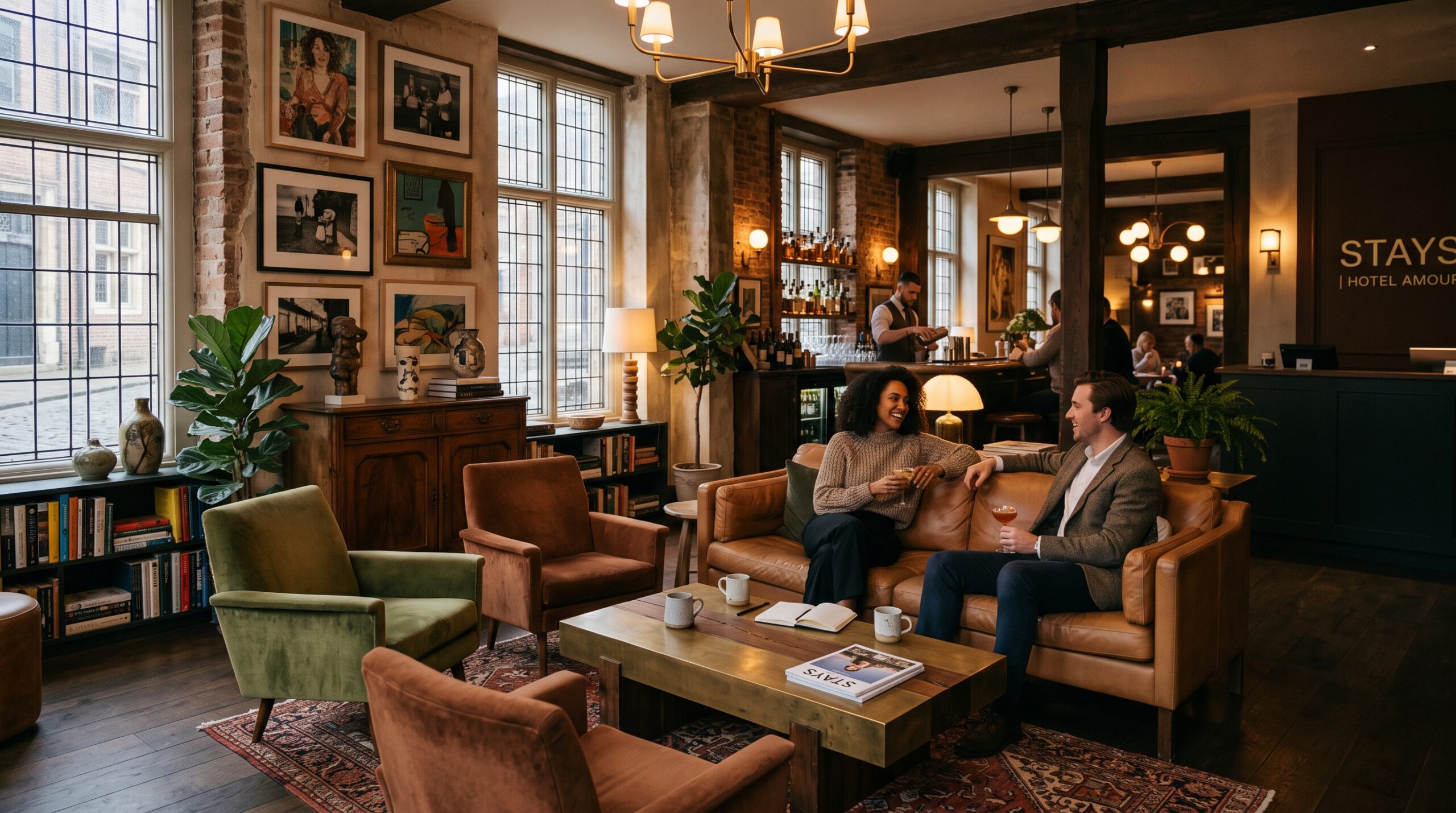
“Boutique” and “design” are not synonyms. A boutique hotel is defined by its size (typically 10-100 rooms), independence (often owner-operated), and service model (personal, non-standardized). A design hotel is defined by its aesthetic — an architecturally significant building, a high-concept interior, a visual-first guest experience — regardless of size or ownership. A property can be both. Many are only one. Knowing the difference changes what you expect at check-in.
The terms are marketing labels, not regulated categories. No licensing body certifies a hotel as “boutique” or “design.” The result is category inflation: 400-room chain properties with exposed-brick accent walls calling themselves boutique; sparsely furnished rooms with a single statement chair claiming design-hotel status. Understanding what each label actually signals — and what it does not — prevents the most common mismatch in hotel booking: expecting personal service and getting a photogenic lobby with indifferent operations.
Boutique Hotels: Defined by Scale and Service
An actual boutique hotel has fewer than 100 rooms, does not belong to a major brand family (Marriott, Hilton, Hyatt, IHG), and operates with a service model closer to a bed-and-breakfast than a corporate hotel. The front-desk agent may also be the concierge. The general manager is often on property and accessible. The breakfast is a single-menu operation, not a buffet for 300 covers. The furnishings are chosen individually, not from a corporate procurement catalog.
What boutique does well: distinctive character, personalized service, local integration. A genuinely good boutique hotel — The Greenwich Hotel in New York (88 rooms), Ett Hem in Stockholm (12 rooms), Hotel SP34 in Copenhagen (118 rooms, pushing the upper limit) — feels like staying in a wealthy friend’s townhouse. Staff learn your name. The restaurant sources locally. The room design reflects the building’s history rather than a brand style guide.
What boutique does poorly: consistency, amenities, and loyalty integration. Boutique hotels do not offer loyalty points, elite-status recognition, or standard amenity packages (guaranteed 4 p.m. checkout, 48-hour laundry turnaround). The absence of a corporate quality-control infrastructure means quality varies by property. One boutique hotel may be exceptional. Its sibling property down the street, under the same ownership group, may be mediocre. Reviews are your only quality signal — there is no brand promise to fall back on.
Design Hotels: Defined by Aesthetic
A design hotel is built around a visual thesis. The building is often architecturally significant — a converted factory, a landmarked mid-century tower, a new build by a name architect. The interiors are high-concept: a single design firm or creative director shapes every surface, from the lobby furniture to the bathroom fixtures to the staff uniforms. The guest experience is secondary to the visual experience by design.
Design Hotels is also a specific brand — a marketing consortium within Marriott Bonvoy — but the category predates and extends beyond the Marriott relationship. Ace Hotel (multiple cities), The Standard (multiple cities), and The Hoxton (London, Amsterdam, Paris, others) are design hotels by any definition. They prioritize lobby-as-social-hub, photogenic interiors, and a strong visual identity over personalized service or room size.
What design hotels do well: aesthetic coherence, social spaces (lobbies that function as co-working spaces and bars), and a sense of arrival that photographs well. A design hotel delivers exactly what its Instagram feed promises. The lobby is often the best room in the building.
What design hotels do poorly: room functionality, service depth, and acoustic privacy. Design hotel rooms tend to be smaller than competitors’ at the same price point. The emphasis on aesthetics can produce rooms that look better than they function — open-plan bathrooms with no sound separation from the bedroom, statement lighting that is too dim to read by, minimal storage because closets disrupt the visual line. Service at design hotels is often transactional: efficient but impersonal, closer to a premium hostel than a boutique hotel. The front desk staff may be too busy managing the lobby bar’s playlist to remember your name.
The Overlap and the Tension
A hotel can be both boutique and design — small, independent, visually distinctive, and personally run. The Greenwich Hotel is both. Ett Hem is both. But the overlap is smaller than the marketing suggests. The tension is structural: boutique hospitality requires operational focus on individual guest experience, while design hospitality requires operational focus on maintaining a visual product. A property that excels at both is rare and typically expensive (USD 500+/night at the entry level).
The category confusion is most acute with chain-backed “boutique” collections: Marriott’s Autograph Collection, Hilton’s Curio Collection, Hyatt’s Unbound Collection. These are marketing labels for independent-style hotels that are, in fact, fully integrated into the parent chain’s booking, loyalty, and quality-control systems. An Autograph Collection hotel in a converted 19th-century bank building may look and feel boutique — small room count, distinctive architecture, local restaurant — but it operates on Marriott’s reservation system, honors Marriott elite benefits, and is managed to Marriott’s operational standards. This is not a criticism. It is a clarification: chain-backed collections are a compromise between boutique character and brand reliability, and they serve travelers who want the former without sacrificing the latter.
Checklist: How to Read the Labels
- Look up the room count. Properties with more than 150 rooms calling themselves boutique are stretching the label beyond its useful meaning.
- Check who owns and operates the hotel. An independent owner-operator is a boutique signal. A Marriott/Hilton/Hyatt/IHG flag, even under a collection brand, is not.
- Read recent guest reviews for service mentions. Boutique reviews emphasize staff relationships. Design hotel reviews emphasize the lobby, the bar, and the aesthetic.
- Look at bathroom photos. Design hotels often have open-plan bathrooms with minimal sound separation. If privacy matters, confirm the bathroom layout before booking.
- Check the room size in square meters or square feet. Design hotel rooms are typically smaller than comparably priced non-design rooms. The tradeoff is intentional — you are paying for the aesthetic, not the square footage.
- Chain-backed collections (Autograph, Curio, Unbound) deliver boutique aesthetics with brand reliability. They are the safest entry point for travelers who want distinctive design without the service-consistency risk of a true independent.
Verdict
Choose a boutique hotel when personalized service and local character matter more than amenities and loyalty points. Choose a design hotel when aesthetics, social spaces, and visual identity are the priority — and accept that the room may be smaller and the service transactional. If you want both, budget USD 500+/night and look for independent properties with fewer than 50 rooms, owner-operator management, and a history of guest reviews that mention staff by name. For most travelers, a chain-backed collection property (Autograph, Curio, Unbound) offers the best compromise: boutique character with brand reliability, elite-status recognition, and points earning — the aesthetic without the operational risk.
FAQ
Q: Are Marriott Autograph Collection hotels actually boutique?
A: They look and feel boutique — distinctive architecture, local design, smaller room counts — but they operate on Marriott’s infrastructure. They are boutique in aesthetic, chain in operations. This is a feature for travelers who want distinctive design with loyalty benefits.
Q: Do boutique hotels have loyalty programs?
A: Most true independents do not. Some belong to soft-brand collections (Autograph, Curio, Unbound, Leading Hotels of the World, Small Luxury Hotels) that partner with major loyalty programs for point earning and redemption. Check the hotel’s program affiliations before booking.
Q: Are design hotels always expensive?
A: No. CitizenM, Moxy (Marriott), and some Hoxton properties deliver design-forward experiences at USD 100-200 per night. The budget design segment is growing. What you sacrifice is room size and service depth — the savings come from smaller rooms and automated check-in.
Q: Is “lifestyle hotel” the same as “design hotel”?
A: Lifestyle hotel is a newer label that emphasizes social programming — lobby DJ sets, pop-up events, co-working spaces — over visual design. W Hotels and The Standard are lifestyle hotels. A design hotel may or may not have lifestyle programming. The terms overlap but are not interchangeable.
Q: How do I find genuinely good boutique hotels?
A: Tablet Hotels, Mr & Mrs Smith, and the SLH (Small Luxury Hotels) directory pre-screen independent properties against quality criteria. These are more reliable filters than OTAs, which do not distinguish between genuinely boutique properties and chain hotels using the term as a keyword.