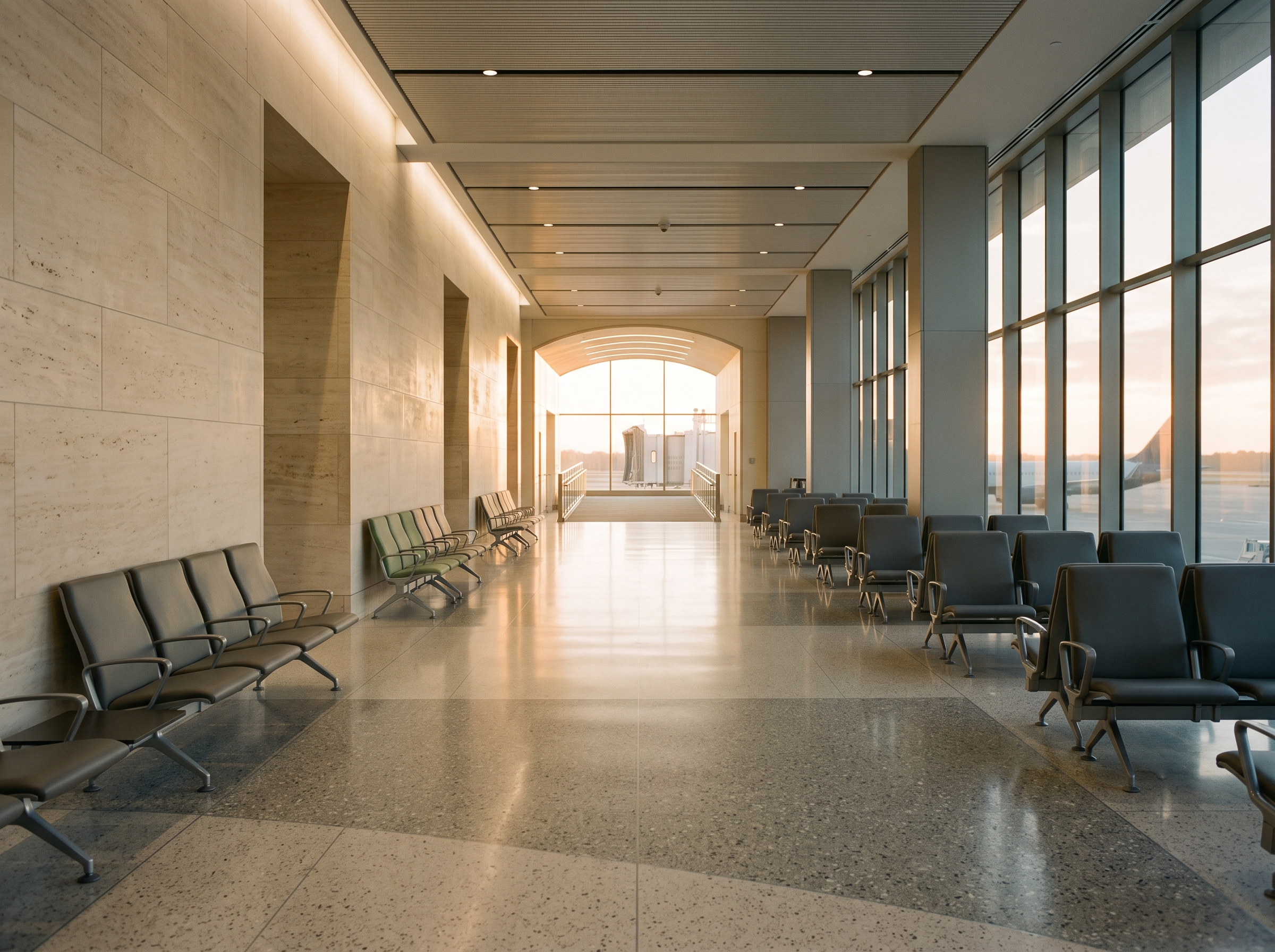
Airport lounges promise an escape from the terminal. The question is not whether they are better than gate seating — they almost always are. The question is whether the access path you are paying for delivers enough value to justify the cost, given how often you actually fly.
The airport lounge market has expanded dramatically in the past decade. What was once a benefit reserved for first-class passengers and airline elite members now extends to credit-card holders, day-pass purchasers, and members of independent lounge networks. The result is more access points, more crowding at popular locations, and more confusion about which path actually makes sense.
There are four primary ways to access an airport lounge. Each carries different costs, different restrictions, and different quality floors. Understanding which one matches your travel pattern is the difference between a benefit you use and a subscription you pay for and forget.
The Four Access Paths
1. Airline Status
Most full-service airlines offer lounge access to passengers traveling in business or first class and to elite-status members of their frequent-flyer programs. The quality ceiling here is the highest — airline-operated lounges at their home hubs are purpose-built facilities with dedicated catering, showers, day rooms, and service standards that independent networks do not match.
The cost is indirect: you earn airline status by flying frequently on a single carrier or alliance, which means routing decisions, fare-class awareness, and loyalty-ladder climbing. For travelers who already concentrate their flying on one alliance, this is the most efficient path. For those who do not, earning status solely for lounge access is rarely rational.
2. Priority Pass (Independent Network)
Priority Pass is the largest independent lounge network, with access to more than 1,600 lounge and dining experiences worldwide. The program operates on three tiers:
| Tier | Annual Fee | Visit Cost | Best For |
|---|---|---|---|
| Standard | $99/year | $35 per visit | Occasional travelers (1-2 lounge visits/year) |
| Standard Plus | $329/year | 10 free visits, then $35 | Regular travelers (5-10 visits/year) |
| Prestige | $469/year | Unlimited free visits, $35/guest | Frequent travelers (10+ visits/year) |
Guest fees are $35 across all tiers. The breakeven math is straightforward: Standard Plus pays for itself at 7 visits (compared to buying 7 day passes at $35 each). Prestige pays for itself at 14 visits versus Standard Plus’s included 10.
The quality range within Priority Pass is enormous. Some lounges are genuinely excellent — dedicated spaces with hot food, showers, and views. Others are converted restaurant vouchers or shared spaces that barely improve on the gate area. Checking lounge reviews before arriving at a specific airport is not optional if you want the benefit to deliver.
3. Credit Card Lounge Access
Many premium credit cards include lounge access as a cardholder benefit, either through Priority Pass membership (typically Prestige-level) or through proprietary lounge networks like American Express Centurion Lounges or Capital One Lounges. The lounge benefit is bundled with other travel perks — airline credits, hotel status, travel insurance — so the effective cost depends on how many of the card’s benefits you actually use.
The strongest credit-card lounge benefits include Priority Pass Prestige (unlimited visits) bundled with cards that also offer airline credits, hotel elite status, and purchase protections. For a traveler who already carries a premium travel card, the lounge access is effectively free — the marginal cost is zero because the card is justified by other benefits.
4. Day Pass (Walk-Up or Pre-Purchase)
Most airline and independent lounges sell day passes, typically $35 to $75 per visit. This is the right path for travelers who fly infrequently but face a specific situation — a long layover, a delayed flight, a connection that needs managing — where lounge access has immediate practical value.
Day passes at premium airline lounges (Polaris, Flagship, Qantas First) are generally not available. These facilities restrict access to premium-cabin passengers and top-tier elite members. The day-pass market is limited to business-class lounges and independent facilities.
When Lounge Access Is Worth It
Long layovers and delays. A three-hour connection is manageable from a gate seat. A six-hour connection or an unexpected delay shifts the calculus — hot food, a shower, reliable Wi-Fi, and a quieter space have real value when terminal time accumulates. For planned layovers and stopovers, lounge access converts dead time into usable time.
Business travelers who work at airports. If the airport is your office between flights — calls, emails, document review — lounge Wi-Fi, power outlets, and relative quiet justify the cost that casual travelers might not recoup. The comparison is not lounge versus gate; it is lounge versus buying food, finding power, and working in noise.
Families traveling with children. Some lounges offer play areas, quieter environments, and food options beyond terminal fast food. The guest fee ($35 per person at Priority Pass) adds up quickly for families, so this only works with a card that includes guest access or a family-oriented lounge program.
When It Is Not Worth It
Short connections. If your layover is 60 to 90 minutes, the lounge visit subtracts time from the connection rather than adding comfort. By the time you clear security, find the lounge, settle in, and walk to your gate, you have spent the connection navigating rather than resting.
Crowded peak-hour lounges. At major hubs during morning and evening peaks, popular lounges hit capacity. A Priority Pass lounge at London Heathrow at 7 AM or a contract lounge at JFK during evening departures may be standing-room-only — which defeats the purpose entirely.
Low-frequency travelers paying full subscription cost. If you fly two or three times a year and do not carry a credit card with bundled lounge access, paying $329 for Standard Plus or $469 for Prestige is not rational. Buy day passes for the specific flights where you need them.
The Checklist
Before paying for lounge access:
- [ ] Count your annual lounge-eligible flights (connections count, short domestic flights probably do not)
- [ ] Check whether your existing credit cards include Priority Pass or a proprietary lounge network
- [ ] If buying a Priority Pass membership directly, calculate the breakeven against $35 day passes
- [ ] For each airport you regularly use, check which lounges your access method covers and read reviews
- [ ] Confirm guest policies — some programs include one guest, some charge $35, some exclude guests entirely
- [ ] Check whether airline status you already hold includes lounge access you are not using
- [ ] For families: calculate total cost including all guest fees before committing
FAQ
Q: Is Priority Pass the same quality everywhere?
A: No. Quality varies enormously by location. The best Priority Pass lounges — dedicated facilities with hot food, showers, and comfortable seating — rival airline business-class lounges. The weakest are restaurant credit vouchers or overcrowded shared spaces. Check the specific lounges at airports you use before buying membership based on network size alone.
Q: Do credit card lounge benefits cover guests?
A: It depends on the card. Some cards include one or two guests at no charge. Others charge $35 per guest. American Express Centurion Lounges charge $50 per guest but allow card members to bring two guests. Always check your specific card’s terms — the guest policy often determines whether the benefit works for couples or families.
Q: Can I use a lounge when flying economy?
A: Yes, if you have independent access through Priority Pass, a credit card benefit, or a day pass. Airline-operated lounges typically restrict access to premium-cabin passengers and elite-status members regardless of your independent lounge membership. The exception is airline contract lounges that accept Priority Pass.
Q: Is airline elite status or Priority Pass better for lounge access?
A: Airline status gives you access to the carrier’s own lounges, which are typically better-appointed and less crowded than Priority Pass facilities. But status requires concentrating your flying on one alliance. If you fly multiple airlines or alliances, Priority Pass covers more airports with a single membership. The ideal combination — carrier status plus Priority Pass through a credit card — gives you the best of both.
Q: Are American Express Centurion Lounges better than Priority Pass lounges?
A: Generally, yes. Centurion Lounges are purpose-built facilities with chef-curated menus, premium spirits, spa services, and controlled access that prevents overcrowding. The tradeoff is network size — Centurion Lounges exist at roughly 15 to 20 US airports, while Priority Pass covers 1,600+ locations worldwide. If your travel is primarily domestic US, Centurion may be sufficient. For international travel, Priority Pass covers more ground.