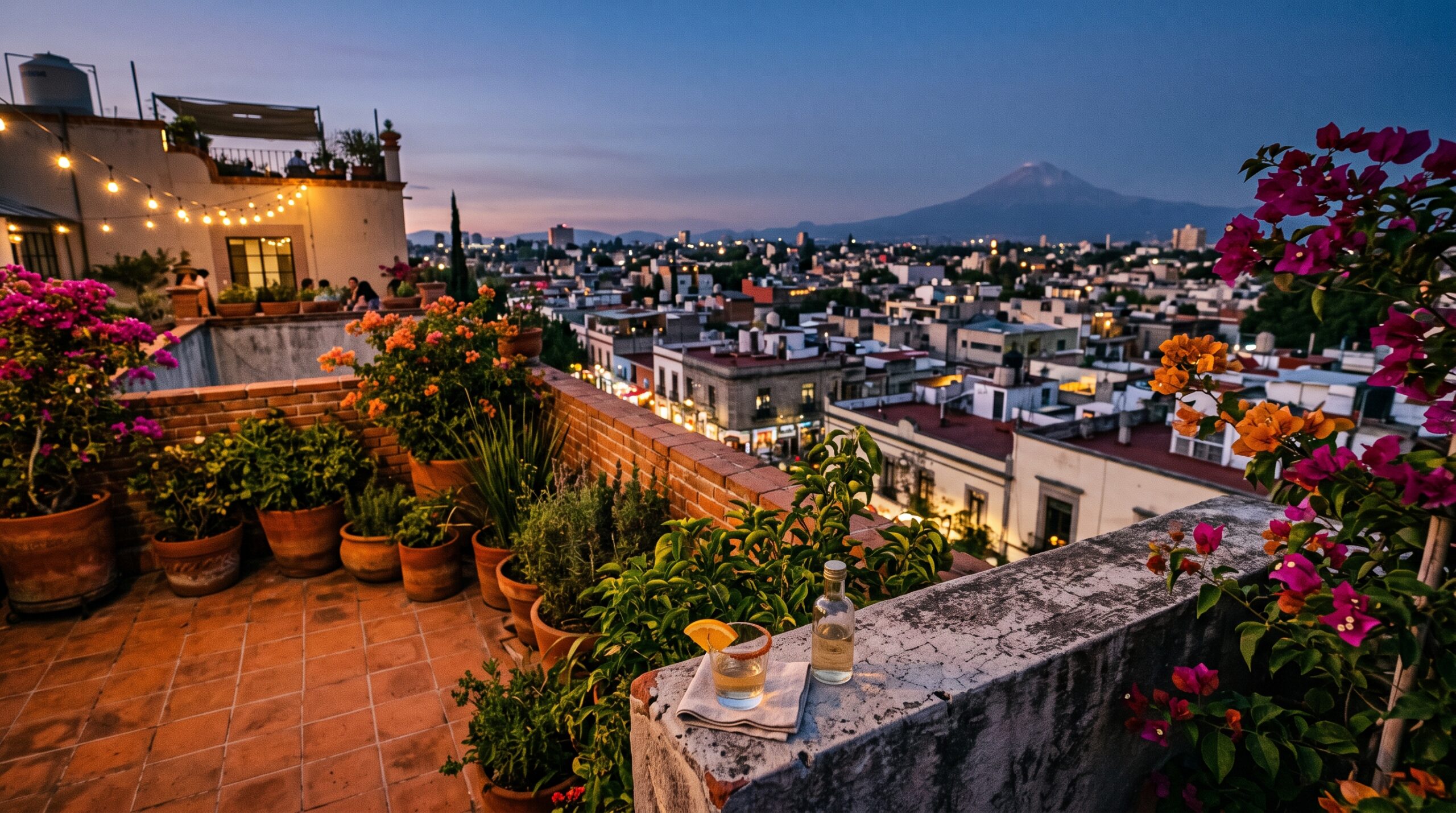
Mexico City works as a base when you choose the right neighborhood, use Uber exclusively for transport, and build a realistic daily budget that accounts for the price gap between tourist-facing and local pricing. It does not work as a base when travelers treat it as a single undifferentiated city — CDMX is a metropolitan area of 22 million people where the difference between a safe, enjoyable stay and a difficult one is often three city blocks.
Mexico City has one of the strongest restaurant scenes in the Western Hemisphere, two of the most significant pre-Columbian archaeological museums in the world, a walkable neighborhood cluster (Roma-Condesa-Juárez) that competes with any European capital for quality of life, and hotel pricing that runs 40-60% below comparable properties in Paris or Tokyo. It also has a US State Department Level 2 advisory — the same level as France, Germany, and Japan — and a petty crime environment in tourist areas that requires consistent attention. The case for Mexico City is strong. It requires honest preparation.
Neighborhoods: Where to Base
Roma Norte and Condesa are the default for first-time visitors and the right choice for most. Roma Norte has the densest concentration of restaurants, cafes, mezcal bars, and walkable blocks in the city. Condesa is greener and slightly calmer, centered on Parque México and Parque España, better for travelers who want residential quiet alongside restaurant access. The two neighborhoods are a 15-minute walk apart and function as a single base. Petty crime is present — phone theft at outdoor restaurant tables and from rideshare pickups — but consistent application of basic precautions (phone in pocket at night, Uber requested from inside rather than on the street) addresses the majority of risk.
Polanco is the luxury option: wide Hausmann-influenced streets, the highest concentration of international luxury hotels (Presidente InterContinental, St. Regis, Las Alcobas, Habita), the Bosque de Chapultepec park on one side, Avenida Presidente Masaryk — Mexico City’s luxury retail corridor — running through the center. Polanco is calmer and more controlled than Roma-Condesa, with a higher security presence. It trades neighborhood energy for polished comfort. Correct choice for travelers prioritizing security and hotel quality over local atmosphere.
Juárez sits between Roma and Polanco and offers strong value: style, proximity to both neighborhoods, and hotel pricing that runs 20-30% below comparable Polanco properties. Less established than Roma-Condesa but increasingly strong for dining and bars.
Centro Histórico houses the Zócalo, the Metropolitan Cathedral, the National Palace, and the Templo Mayor archaeological site — the most significant historical core in the city. It is worth several days of exploration but is not recommended as a base for first-time visitors: the neighborhood’s safety profile is more variable than Roma-Condesa or Polanco, particularly after dark and on weekends when crowds create pickpocket conditions.
Getting Around
The rule is consistent: Uber only, no street taxis. The Mexico City metro is efficient and cheap (USD 0.25 per ride) but is not recommended for visitors carrying luggage or devices due to crowd conditions on main lines during rush hour. For neighborhoods covered in this guide, Uber fares run USD 3-8 per trip within the Roma-Condesa-Polanco triangle. Airport transfers should be booked through the official airport taxi desk (TAPO) or via Uber from within the terminal — not with drivers soliciting arrivals in the arrivals hall.
The Restaurant Scene
Mexico City’s dining has undergone significant development since 2019 and currently includes multiple entries on the Latin America’s 50 Best Restaurants list (Pujol, Quintonil, Sud 777, Rosetta). The more relevant practical point for visitors: at every price level below these flagship restaurants, the quality-to-cost ratio in Mexico City is exceptional. A full lunch at a well-regarded taqueria in Roma runs USD 8-12. A dinner at a serious mid-range restaurant — wine-focused, contemporary Mexican menu — runs USD 35-60 per person. The fine dining tier (Pujol tasting menu) runs USD 120-180 per person. Reservations at the flagship restaurants require advance booking of 4-8 weeks minimum.
Day Trips and Surrounding Context
Teotihuacán is 45 minutes from the city center and contains two of the most significant pyramids in the Americas — the Pyramid of the Sun (third-largest in the world by volume) and the Pyramid of the Moon. Morning visits before 10 a.m. are strongly preferred for both temperature and crowd reasons. Hire a guide; the site’s interpretive infrastructure does not do justice to its complexity without context. Tula (Hidalgo), Cholula (Puebla), and the town of Puebla itself are viable day trips or overnight extensions for travelers with 10+ day stays.
Verdict
Mexico City is one of the strongest value propositions in long-haul travel from North America and Europe in 2026: exceptional food, world-class archaeology, a walkable luxury neighborhood cluster, and significantly lower hotel and dining costs than comparable European or Asian cities. It requires neighborhood selection and consistent transport discipline. Travelers who apply both will find it one of the most rewarding cities available at its price point.
FAQ
Q: Is Mexico City safe for solo travelers?
A: Yes, in the neighborhoods covered — Roma Norte, Condesa, Polanco, Juárez — with consistent application of standard precautions. Solo female travelers specifically: these neighborhoods have good foot traffic and active street life through late evening. Use the same precautions you would in any major city: Uber over street taxis, phone in pocket, avoid solo late-night returns through quiet streets.
Q: What is the best time of year to visit Mexico City?
A: November through May, before the rainy season. June through September brings afternoon thunderstorms that are short but heavy. October is a transition month — fewer storms, comfortable temperatures. Mexico City’s altitude (2,240 meters) keeps temperatures moderate year-round: 18-23°C is typical, with cooler nights in December-January.
Q: How many days do I need in Mexico City?
A: A minimum of 5 days to cover the essential neighborhoods, major museums (Anthropology, Frida Kahlo, Soumaya), Centro Histórico, and one day trip to Teotihuacán. Seven to ten days allows a more relaxed pace and a second day trip to Puebla or Tepoztlán.
Q: Do I need to speak Spanish in Mexico City?
A: English is widely spoken in Roma, Condesa, and Polanco — in hotels, at well-regarded restaurants, and at most tourist sites. Outside these neighborhoods and at street-level interactions (taquerias, markets, metro), Spanish is required. Basic conversational Spanish significantly improves the experience everywhere.
Q: What altitude sickness precautions should I take?
A: Mexico City at 2,240 meters does cause mild altitude symptoms in some visitors — headache, fatigue, slight breathlessness — for the first 24-48 hours. Hydrate aggressively, avoid alcohol on day one, and take the first day at a low-intensity pace. Full adjustment typically occurs within 48 hours.