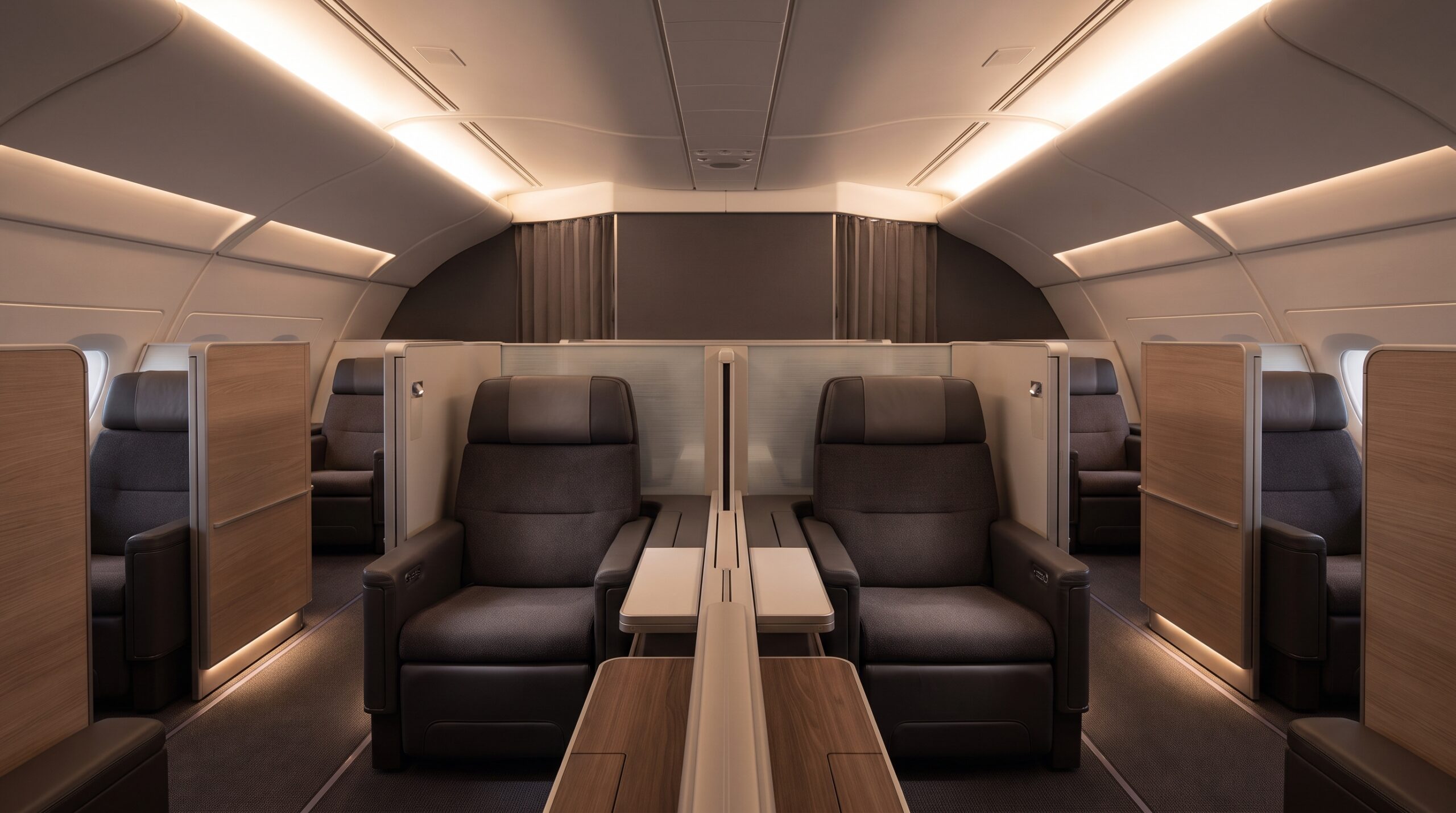
Pay for seat selection when you need a specific seat type — extra legroom on a long-haul flight, a pair of seats for two travelers, a window for a redeye — and the cost is under roughly EUR 50 per segment. Do not pay when you are indifferent to seat location, flying an airline that assigns adjacent seats for free at check-in, or booking a fare class that includes seat selection. The math changes by airline, route length, and whether you are traveling solo.
Airlines have unbundled seat selection into a significant revenue category. What was once free is now a line item that can add EUR 100-300 to a round-trip long-haul ticket, per person, before you have selected a meal or checked a bag. The decision to pay or not is not about whether seat selection is a good deal in the abstract. It is about which specific flights, airlines, and traveler profiles make it worth the money.
What You Are Actually Buying
“Seat selection” is not one product. It breaks into four categories, and the value proposition is different for each.
Extra-legroom seats (economy plus, main cabin extra, preferred seats): These are standard economy seats with 3-6 inches of additional pitch, located in dedicated rows near the front of the economy cabin or at exit rows. On flights over 6 hours, the legroom difference is material. On flights under 3 hours, it is marginal. These seats also typically come with earlier boarding and earlier deplaning, which can save 10-15 minutes at the destination airport — relevant if you have a tight connection.
Standard seat assignment (any non-premium seat): You are paying to pick your seat rather than having one assigned at check-in. The seat itself is identical to what you would get for free. The only thing you are buying is choice — window vs. aisle, front vs. back, adjacent seats for a group.
Exit-row seats: Extra legroom with a responsibility tradeoff: you must be physically capable of operating the exit door and willing to assist in an evacuation. Airlines restrict these seats to passengers who meet age, mobility, and language requirements. If you qualify, they are often the best value in the cabin — exit-row legroom can exceed premium economy on some aircraft.
Upgraded economy cabins (Premium Economy, World Traveller Plus, Premium Select): This is a different cabin class, not a seat selection within economy. Wider seats, more recline, better meal service, higher baggage allowance. The price gap to standard economy is typically EUR 300-800 on long-haul routes, which is a separate decision framework from picking a seat within the economy cabin.
What the Major Airlines Charge (International Long-Haul)
Delta: Preferred seats (standard location) from roughly EUR 25-50 per segment. Delta Comfort+ (extra legroom) varies by route — typically EUR 75-200 per segment on international flights. Basic Economy fares get auto-assigned seats at check-in. SkyMiles elite members receive complimentary preferred seat selection and potential upgrades to Comfort+ [1].
United: Economy Plus (extra legroom) starts at roughly EUR 140 per traveler per direction on international flights. Standard preferred seats from roughly EUR 25-60 per segment. United Premier elite members can select Economy Plus at booking for free [2].
American Airlines: Main Cabin Extra (extra legroom) pricing varies by route and segment length. Preferred seats from roughly EUR 20-55 per segment. AAdvantage elite members receive complimentary Main Cabin Extra at booking based on tier [3].
British Airways: Charges for seat selection on most fare types except fully flexible business-class fares and top-tier Executive Club status. Standard seat selection typically GBP 20-40 per segment for long-haul economy; exit row and front-of-cabin seats cost more. BA charges even for seat selection at online check-in on some fare classes unless you wait until airport check-in opens [4].
Emirates: Standard seat selection is free at check-in (48 hours before departure). Advance selection of standard seats is free on Flex and Flex Plus fares. Saver and Special fares pay for advance seat selection. Extra-legroom seats and twin seats (pairs of two on the A380 upper deck) carry additional fees [5].
Low-cost long-haul carriers (Norse Atlantic, French Bee, Zipair) charge for all seat selection, with premium seats priced higher than on legacy carriers — the seat selection is part of the unbundled revenue model that makes the headline fare possible.
When to Pay: The Decision Framework
Pay for seat selection when:
- You are flying long-haul (6+ hours) and extra legroom costs under EUR 100 per segment. The marginal comfort per euro is high.
- You are traveling as a pair or family and need adjacent seats. Airlines do not guarantee adjacent seating for free, and separation at check-in is common on full flights.
- You have a specific need — window for sleeping on a redeye, aisle for frequent bathroom access, front-of-cabin for a tight connection.
- You are flying an airline that charges for all advance seat selection (British Airways, low-cost long-haul carriers) and seat location matters to you.
- You are tall (over 185 cm / 6’1″) and the standard pitch on your flight is under 31 inches — which includes most long-haul economy cabins.
Skip seat selection when:
- You are flying solo and indifferent to window vs. aisle. You will get a seat. It may not be your first choice.
- You are flying an airline with generous free seat assignment — Emirates assigns at check-in for free, as do most full-service Asian and Middle Eastern carriers.
- Your fare class includes seat selection (Flex, Main Cabin, standard economy on most non-basic fares).
- You hold elite status that includes complimentary seat selection.
- The flight is under 3 hours. The seat you are in matters less.
- The seat selection fee exceeds roughly 10% of the ticket price for a standard seat assignment. At that ratio, you are paying for choice, not comfort.
The Equipment Change Trap
An airline can change aircraft between booking and departure. If you paid for a specific seat on an A350 and the airline swaps to a 777 with a different seat map, your paid seat selection may be reassigned or lost entirely. Airlines typically refund the fee if they cannot accommodate your original selection on the new aircraft, but they do not compensate for the loss of the seat type you chose. The companion article on equipment changes covers how to catch these swaps and what to do when they happen. For now, know this: paying for a seat does not guarantee that seat will exist on departure day.
Checklist: Seat Selection Decision
- Route length: under 3 hours — probably skip. 3-6 hours — situational. 6+ hours — pay if extra legroom and cost is reasonable.
- Fare class: does your ticket already include seat selection? Check before paying separately.
- Elite status: check your published benefits. Most mid-tier and above airline status includes complimentary preferred or extra-legroom seating.
- Group travel: if you need adjacent seats, pay for selection. Separation is the default on full flights.
- Physical needs: tall, broad-shouldered, or mobility-constrained travelers get more value from seat selection. Book accordingly.
- Check the specific aircraft type and seat map on SeatGuru or AeroLOPA before selecting. Not all “extra legroom” seats are equal — some exit-row seats have limited recline or are next to lavatories.
- Monitor the booking for equipment changes. Most airlines email about schedule changes but not about seat map changes caused by an aircraft swap.
What This Can’t Tell You
This framework cannot tell you whether a specific seat on a specific flight is worth the price to you personally. Comfort is subjective. A EUR 80 extra-legroom seat on a 10-hour flight is a bargain to a 193 cm traveler and an unnecessary expense to a 160 cm traveler. It also cannot predict equipment changes, which invalidate seat selections without warning. And it does not cover premium economy as a cabin class, which is a different product with a much higher price point and a separate decision framework.
Verdict
Seat selection is worth paying for on long-haul flights when you have a specific need — extra legroom, adjacent seating, a window seat on a redeye — and the cost is reasonable relative to the ticket price. It is not worth paying for on short flights, when you are indifferent to seat location, or when your fare class or elite status already includes it. The most common mistake is paying for standard seat assignment on a 2-hour flight when check-in auto-assignment would have been fine. The second most common is not paying for extra legroom on a 12-hour flight and spending the entire journey with your knees against the seatback tray table. Know which category your flight falls into before you book.
FAQ
Q: Will I be seated next to my travel companion if I do not pay for seat selection?
A: Possibly, but not guaranteed. Airlines assign seats algorithmically and prioritize operational efficiency over group seating. On flights below roughly 70% load factor, adjacent seats are likely. Above 80%, separation is common. If sitting together matters, pay for selection.
Q: Does buying a more expensive fare class include seat selection?
A: Usually yes. Main Cabin (not Basic), standard economy, and Flex fares on most full-service carriers include complimentary standard seat selection at booking. Check the fare conditions before paying separately.
Q: Are exit-row seats worth the extra cost?
A: If you qualify (age 15+, physically capable, English-speaking on US/UK carriers), yes. Exit-row legroom often exceeds premium economy pitch at a fraction of the upgrade cost. Avoid exit rows with limited recline (the row ahead of an exit row) or proximity to lavatories (constant traffic and noise).
Q: Do airlines refund seat selection fees if I cancel my flight?
A: It depends on the airline. Some refund seat fees on refundable fares; most do not on nonrefundable fares. American Airlines refunds seat fees if you cancel within 24 hours of booking. British Airways typically does not refund seat selection fees on cancellation. Check the airline’s specific policy before paying.