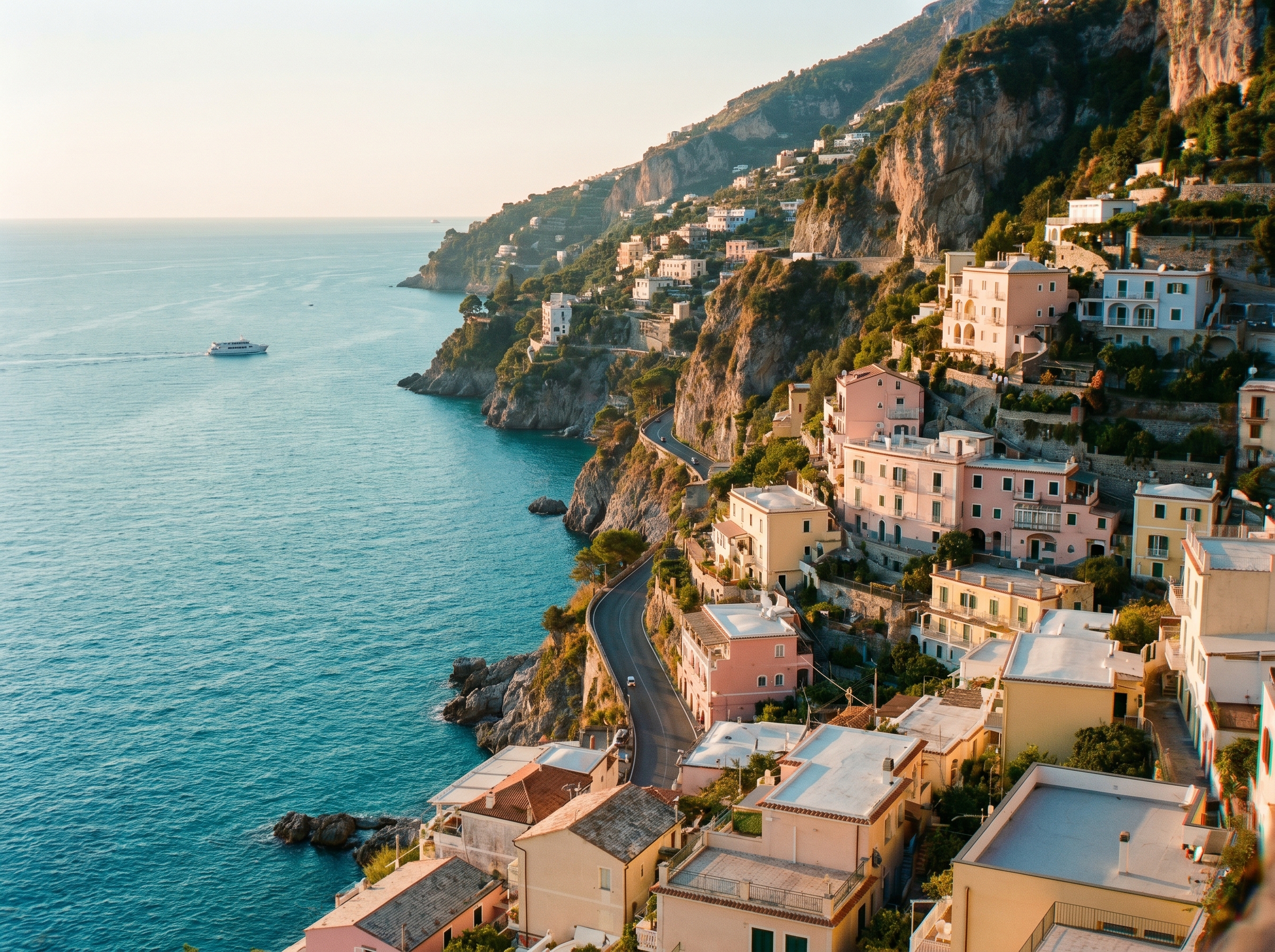
The Amalfi Coast in 2026 delivers one of the most concentrated doses of beauty in Europe. It also delivers some of the worst value. For travelers who can visit in May or late September, stay in a town that is not Positano, and approach the experience as a landscape rather than a checklist, the coast remains worth the trip. For everyone else, particularly anyone planning a July or August visit, the reality is crowded roads, restricted driving access, hotel rates that can exceed $500 per night, and a pervasive sense that the destination is struggling under its own popularity.
This is not a “skip the Amalfi Coast” piece. The geography is genuinely extraordinary, and no alternative replicates the vertical drama of towns stacked on cliffs above the Tyrrhenian Sea. But the conditions under which the coast works as a travel experience have narrowed significantly, and understanding those conditions before you book is the difference between a memorable trip and an expensive disappointment.
The Overcrowding Is Not Hype
The Amalfi Coast draws millions of visitors into a physically constrained space. The SS163, the single coastal road connecting the towns, is a narrow two-lane route carved into cliffs. It was built for local traffic, not for the volume it now carries. The towns themselves, Positano and Amalfi especially, are compact vertical settlements with limited street capacity. When the crowds arrive, there is nowhere for them to go except into each other.
May 2026 brought a wave of viral social media coverage showing the positano crush at its worst, with footage of packed streets and commentary from travel experts describing the coast as a destination that was never designed for millions of visitors at once. The numbers are stark: the nearby island of Capri alone records nearly 2 million arrivals annually with daily peaks of 20,000 people. The Amalfi towns face similar or worse pressure during the summer months.
The practical effect for travelers: between roughly 10 a.m. and 4 p.m. from June through September, the primary towns are dominated by day-trippers. The streets are packed. Restaurants with views run on reservations made weeks in advance. The experience of a quiet coastal village, which is what most people are actually paying for, is unavailable during those hours. If you want that experience, you need to stay overnight and claim the early mornings and late evenings, when the day-trippers are gone and the coast belongs to the people sleeping there.
License Plate Restrictions in 2026
The Italian authorities have implemented a license plate restriction system on the SS163 Amalfitana that runs from August 1 through October 31, 2026. Between 10 a.m. and 6 p.m., vehicles are subject to alternating access based on whether the last digit of the license plate is odd or even, with the restricted digit alternating daily. During August and September these restrictions apply every day; in October they apply on weekends and public holidays only.
The restrictions do not apply to residents, tourists with confirmed hotel bookings on arrival and departure days only, taxis and private hire vehicles, or motorcycles. But if you are driving yourself and staying outside the restricted zone, you need to plan around the schedule, and the schedule changes daily. A rental car with the wrong plate number on the wrong day means you are not driving the coast road that day.
Even without restrictions, driving the SS163 during peak hours is a slow, stressful experience. The better strategy for most visitors is to base in Salerno or Sorrento and use ferries and buses to reach the coastal towns, or to stay in one of the smaller towns (Praiano, Maiori, Minori) where the tourist pressure is lower and a single base lets you explore without daily transport logistics.
The Price Reality
The Amalfi Coast is expensive in a way that surprises people who have traveled elsewhere in Italy. A mid-range hotel in Positano during peak season runs EUR 250 to EUR 500 per night. The same standard in Amalfi town costs EUR 120 to EUR 300 per night. Restaurants and beach clubs follow the same gradient, with Positano commanding roughly a 40 percent premium over Amalfi for comparable quality.
Even within the coast, there are real pricing tiers. Positano sits at the top, driven by its Instagram profile and limited hotel inventory. Ravello, perched 365 meters above the sea with no direct beach access, offers a cultural alternative with lower crowds but similarly high prices. Amalfi town provides the best value among the primary destinations: flatter streets, the best ferry connections on the coast, more dining options at moderate prices, and hotel rates that undercut Positano by 40 to 50 percent. Praiano, twenty minutes from Positano, offers comparable views at roughly half the hotel cost.
If you are determined to experience Positano’s specific aesthetic, the financially rational approach is to visit for an afternoon or a day trip and sleep elsewhere. A sea-view room in Positano costs EUR 350 to EUR 500 per night in summer. A comparable sea-view room in Praiano runs EUR 180 to EUR 250. Over five nights, the difference is roughly EUR 850 to EUR 1,250. That buys a lot of dinners and ferry tickets.
When to Go
The best months for the Amalfi Coast are May, June, and September. May and September offer dry-season weather without peak July and August crowds. June brings warmer water for swimming but still manageable tourist volumes. July and August are the months to avoid: maximum crowds, maximum prices, maximum heat, and the worst transport congestion. October can be pleasant but brings shorter days, occasional rain, and the beginning of seasonal closures.
One specific timing consideration: the license plate restrictions extend through October 31, 2026. If you plan an October visit with a rental car, you remain subject to the alternating plate system on weekends and public holidays, though weekday restrictions lift after September 30.
The Alternative: Cilento Coast
Roughly two hours south of the Amalfi Coast, in the province of Salerno, lies the Cilento Coast. It offers rugged cliffs, clear water, and authentic Italian coastal towns without the crowds or the pricing. The region is part of a UNESCO-protected national park and remains largely untouched by mass tourism.
Cilento’s beaches, including Cala Bianca and Buon Dormire, are widely regarded as better than anything on the Amalfi Coast. The medieval hilltop villages of Agropoli and Acciaroli offer a cultural depth that Positano’s boutique storefronts do not. Accommodation runs EUR 60 to EUR 120 per night for a double room with breakfast in mid-range options, roughly a third to half of Amalfi Coast pricing. The shoulder months of May, June, and September offer the best combination of weather and availability.
The trade-off is straightforward: no cliff-hanging vertical towns, no iconic Positano photography, and less developed tourist infrastructure. Cilento is a different product, not a direct substitute. But for travelers who want the Italian coastal experience without the Amalfi premium, it is the strongest alternative in the region.
The Verdict
The Amalfi Coast still delivers on its core promise: extraordinary geography, a Mediterranean climate, and some of the most dramatic coastal scenery in Europe. But it delivers that promise only under specific conditions: a shoulder-season visit, a base outside Positano, and an itinerary built around the landscape rather than the towns during peak hours.
If you are planning a July or August trip, staying in Positano regardless of cost, or expecting the quiet fishing-village atmosphere the marketing materials imply, you will be disappointed. The coast is crowded, expensive, and logistically demanding in a way that most first-time visitors do not anticipate. Adjust your expectations and your timing accordingly, or look south to Cilento.
Frequently Asked Questions
Q: Is Positano worth the premium over other Amalfi Coast towns?
A: Positano offers the most iconic views and the most concentrated luxury hotel inventory on the coast. It also commands a roughly 40 percent premium over Amalfi town and roughly double the cost of Praiano for comparable accommodations. If the specific Positano aesthetic (vertical cliffside town, the postcard view from the sea) is a priority, visit for an afternoon and stay elsewhere. If you are indifferent to the brand, base in Amalfi or Praiano and use ferries for day access.
Q: Can you drive the Amalfi Coast in 2026?
A: Yes, with restrictions. The SS163 is subject to alternating license plate access from August 1 through October 31, 2026, between 10 a.m. and 6 p.m. The system runs on odd/even plates alternating daily. Rental cars with the wrong plate are excluded on their restricted days. Motorcycles are exempt. The practical advice: do not drive the coast during peak hours regardless of restrictions. The road is narrow, slow, and stressful. Use ferries and buses instead.
Q: What is a reasonable Amalfi Coast hotel budget?
A: For a mid-range hotel during peak season (July and August), budget EUR 250 to EUR 500 per night in Positano, EUR 120 to EUR 300 in Amalfi town, and EUR 180 to EUR 250 in Praiano. Shoulder season (May, June, September) reduces these numbers by roughly 20 to 30 percent. The Cilento Coast, two hours south, offers comparable mid-range accommodation at EUR 60 to EUR 120 per night.
Q: What is the best alternative to the Amalfi Coast?
A: The Cilento Coast offers a similar Italian coastal experience with better beaches, significantly lower prices, and a fraction of the crowds. It lacks the vertical cliff-town aesthetic of Positano and Amalfi, but its UNESCO-protected national park, medieval villages, and authentic seafood restaurants make it the strongest regional substitute. Puglia, on the Adriatic side, is another option with different geography but similar Mediterranean appeal at lower cost.