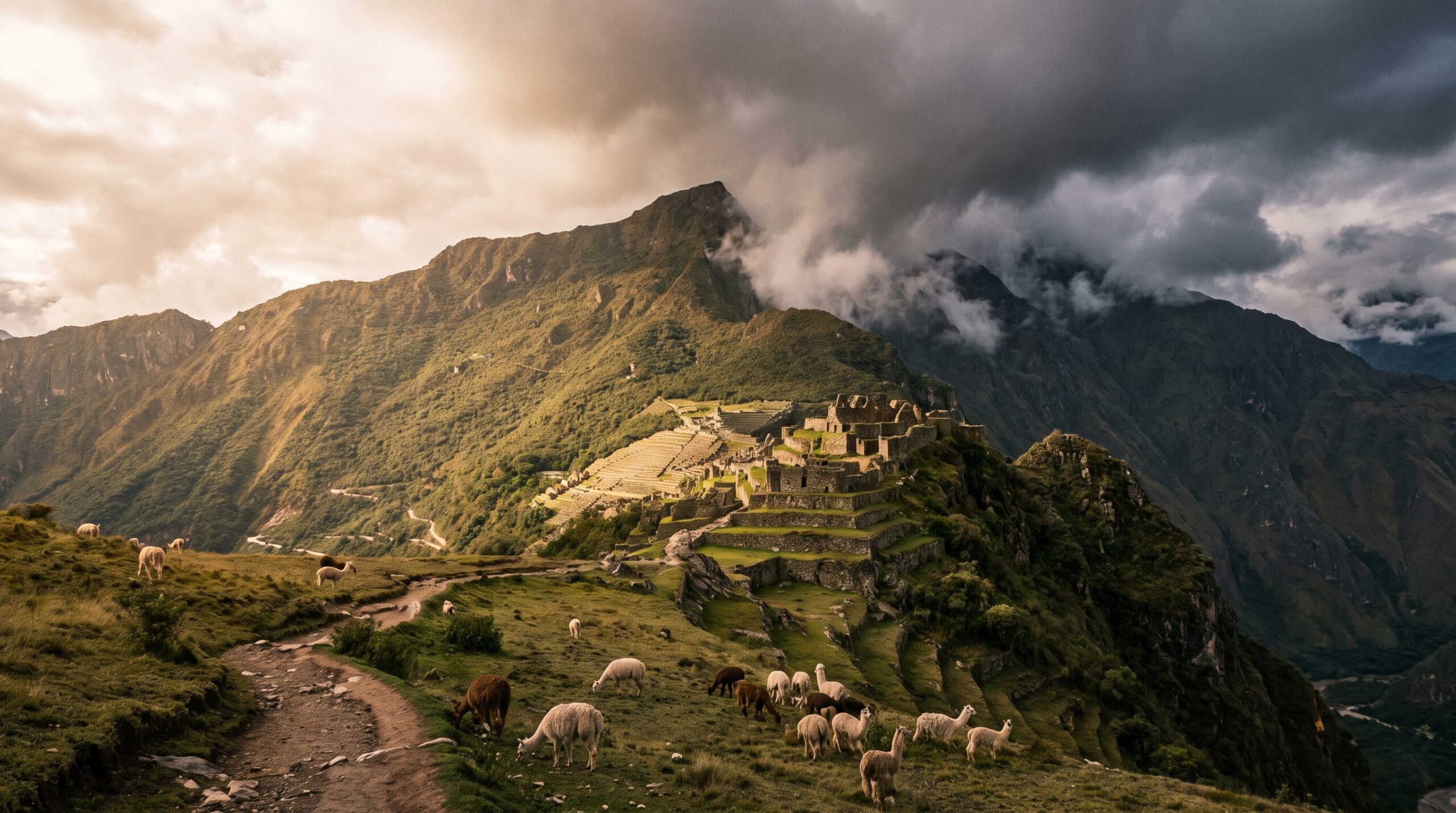
A 10-day Peru trip should include Lima, the Sacred Valley, Machu Picchu, and Arequipa with Colca Canyon. Skip the Nazca Lines unless you are specifically flying over them — the detour costs a full day and the experience is a 35-minute flight that some passengers find nauseating. Skip Lake Titicaca unless you have 14+ days. The itinerary that works is a sequenced arc from coast to highlands, not a checklist of every southern attraction.
Peru is one of the most logistically demanding countries in South America to plan well. Distances are long, roads are slow, and altitude — Arequipa sits at 2,335 meters, Cusco at 3,400 meters, Lake Titicaca at 3,800 meters — is a genuine variable that shapes pacing. The standard southern circuit covers roughly 2,500 kilometers of ground. Attempting all of it in 10 days means spending more time on buses than at sites. The itinerary below prioritizes depth over coverage and cuts what does not earn its transit hours.
The 10-Day Itinerary That Works
Day 1: Arrive Lima. Fly into Jorge Chavez International. Do not try to see Lima today — you have just landed at sea level after a long flight. Check into Miraflores or Barranco, walk the malecón, eat ceviche. Lima’s food scene is world-class — Central, Maido, and Astrid y Gastón are among the best restaurants in Latin America — but even a neighborhood cevichería delivers a meal you will remember. Overnight Lima.
Day 2: Fly to Arequipa. A 90-minute morning flight. Arequipa is Peru’s second city, built from white volcanic sillar stone, with a colonial core that is a UNESCO World Heritage site. Spend the afternoon walking the Plaza de Armas, visiting the Santa Catalina Monastery — a 16th-century convent that is essentially a walled city within the city — and eating rocoto relleno (stuffed spicy pepper), the city’s signature dish. Arequipa’s altitude (2,335m) is the right intermediate step before Cusco (3,400m). Overnight Arequipa.
Day 3: Colca Canyon day trip. Depart Arequipa at 3 a.m. — yes, 3 a.m. — for the 3.5-hour drive to Cruz del Cóndor, the canyon rim viewpoint where Andean condors ride morning thermals. The canyon itself is deeper than the Grand Canyon (twice as deep at its maximum). After the condor viewing, visit the hot springs at Chivay and return to Arequipa by evening. This is a long day. It is worth it. Overnight Arequipa.
Day 4: Fly Arequipa to Cusco, then transfer to Sacred Valley. A 60-minute morning flight. From Cusco airport, transfer directly to the Sacred Valley (Urubamba, Ollantaytambo, or Pisac) rather than staying in Cusco itself. The Sacred Valley sits at roughly 2,800 meters — lower than Cusco — making it a better altitude-acclimatization base. Spend the afternoon visiting the Pisac market and ruins. Overnight Sacred Valley.
Day 5: Sacred Valley exploration. Visit the Ollantaytambo fortress — a massive Inca complex with terraces climbing the mountainside — and Moray, the circular agricultural terraces that functioned as an Inca crop laboratory. The salt mines at Maras, a patchwork of thousands of evaporation pools on a hillside, are a 30-minute detour and photograph like nothing else in Peru. Overnight Sacred Valley.
Day 6: Machu Picchu. Take the early-morning train from Ollantaytambo to Aguas Calientes (1.5 hours), then the 25-minute bus up to the citadel. Book the 6-8 a.m. entry slot — the morning light on the ruins is the best of the day, and the crowds are thinner. Spend 3-4 hours at the site, then train back to Ollantaytambo or onward to Cusco. Overnight Cusco.
Day 7: Cusco. You have been at altitude for four days now. Cusco at 3,400 meters should be manageable. Walk the Plaza de Armas, visit Qorikancha (the Inca Temple of the Sun, partly incorporated into the Santo Domingo convent), and explore the San Blas artisan neighborhood. Cusco rewards aimless walking more than any other city in Peru. Overnight Cusco.
Day 8: Cusco. Second full day. Visit Sacsayhuamán — the massive Inca stone fortress above the city, where stones weighing over 100 tons are fitted together without mortar — and the San Pedro market. If you want a hiking day, Rainbow Mountain (Vinicunca) is a full-day trip from Cusco. Be aware: the altitude at Rainbow Mountain exceeds 5,000 meters. This is not a casual hike. Overnight Cusco.
Day 9: Fly Cusco to Lima. Morning flight. Spend the afternoon in Lima’s Barranco district — galleries, coffee, the Puente de los Suspiros — or do a food tour. Farewell dinner at a cevichería or one of Lima’s top restaurants. Overnight Lima.
Day 10: Depart Lima.
What to Skip
Nazca Lines: The Nazca Lines are remarkable. The experience of seeing them is a 35-minute flight in a small Cessna over desert geoglyphs, preceded by a 6-7 hour bus from Lima and followed by another 6-7 hours to Arequipa. The flight is bumpy — the pilot banks steeply to give both sides a view — and motion sickness is common. In a 10-day itinerary, Nazca costs a full day of transit and leaves you tired. Skip unless the Nazca Lines are specifically why you came to Peru.
Lake Titicaca: The highest navigable lake in the world, the floating Uros reed islands, and the cultural experience on Taquile Island are genuine attractions. The problem is distance: Cusco to Puno is a 7-hour bus or a train journey that costs more than the flight it replaces. Lake Titicaca deserves 3 days minimum. Adding it to a 10-day itinerary means cutting Arequipa and Colca Canyon — a worse trade. Save Titicaca for a 14+ day trip or a separate Bolivia-focused itinerary.
Checklist: Peru Itinerary Decisions
- Altitude management is the pacing variable. Lima (sea level) → Arequipa (2,335m) → Sacred Valley (2,800m) → Cusco (3,400m) is the correct step-up sequence.
- Book Machu Picchu entry tickets and the train 6-8 weeks ahead for peak season (June-August). Tickets sell out.
- Fly Arequipa-Cusco rather than bus (10-11 hours vs. 1 hour). The time savings are worth the fare difference.
- Stay in the Sacred Valley before Cusco, not the reverse. Lower altitude, better acclimatization.
- Pack layers. Mornings in the Sacred Valley at 8°C and afternoons at 22°C are the same day.
- Altitude sickness medication (acetazolamide/Diamox) should be started 24-48 hours before ascent. Consult your doctor.
What This Can’t Tell You
This framework assumes a standard leisure trip with cultural and outdoor interests. It does not cover the Amazon (Iquitos or Puerto Maldonado), which requires 3-4 additional days and a separate flight. It does not cover the northern circuit (Trujillo, Chiclayo, Chachapoyas), which is a different trip entirely. And it cannot predict your personal altitude response — some travelers are fine at 3,400 meters within a day; others need four days and still feel the effects. Build flexibility into Day 7-8 for altitude recovery.
FAQ
Q: How bad is the altitude in Cusco?
A: Cusco is at 3,400 meters. Most travelers experience mild symptoms — headache, shortness of breath on stairs, fatigue — for 24-48 hours. The step-up sequence through Arequipa and the Sacred Valley reduces this. Avoid alcohol on Day 1 at altitude. Drink more water than you think you need.
Q: Is Machu Picchu accessible without hiking the Inca Trail?
A: Yes. The vast majority of visitors take the train from Ollantaytambo to Aguas Calientes, then a 25-minute bus up to the citadel. The Inca Trail is a separate 4-day trek that requires permits booked 6+ months in advance. The train-and-bus route is the standard experience.
Q: Is Peru safe for solo travelers?
A: Generally yes. Lima requires the same urban awareness as any large Latin American city — avoid walking alone late at night in non-tourist areas, use registered taxis or ride-share apps. Arequipa, Cusco, and the Sacred Valley are safer and more tourist-oriented. Standard precautions apply.
Q: Can I do Peru and Machu Picchu as a single-country trip without combining with Bolivia or Ecuador?
A: Absolutely. The 10-day itinerary above delivers four distinct experiences — coastal food capital (Lima), colonial highland city (Arequipa), Andean canyon (Colca), and Inca citadel (Machu Picchu/Cusco) — without needing a second country.