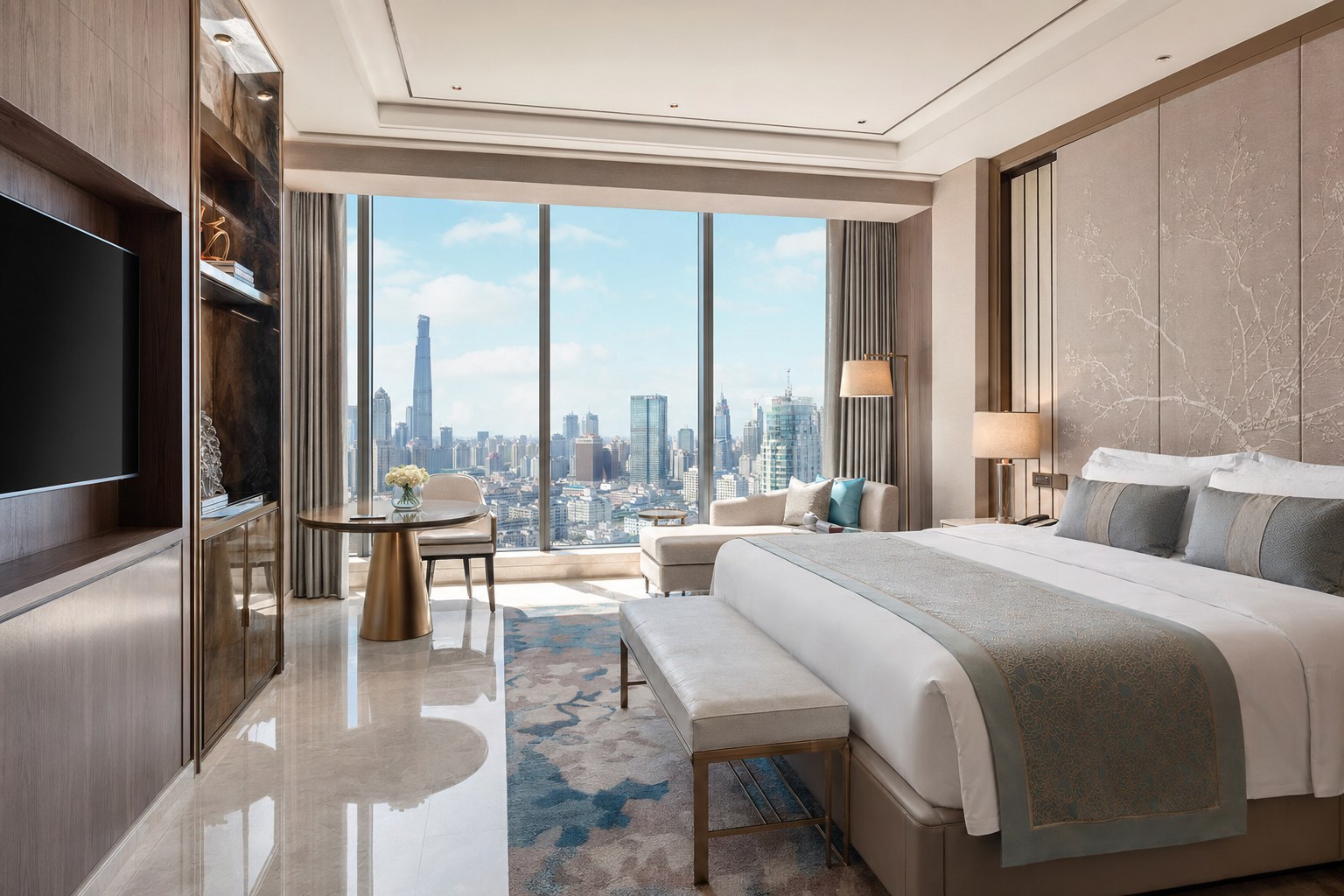
“Deluxe” doesn’t mean what you think it means. Neither does “Superior,” “Premium,” or “Grand.” These words are not descriptions. They’re internal labels, built for inventory and pricing, then handed to guests as if they’re meaningful product definitions.
At most hotels, room categories are a hierarchy designed for revenue management, not clarity. Knowing how to read past the naming system is often the difference between paying significantly more for the same room and actually upgrading.
What This Is
A short decoding guide to hotel room categories. It focuses on the variables that actually determine room quality, and why the category name is usually the last thing you should rely on.
This applies to most major brands and most independent properties with multiple room tiers. Small properties with only a few room types are the exception.
Before You Book: Verify These Directly
- Room size (sqm/sq ft)
- Bed type and occupancy rules
- Floor level or floor range
- View category — and what it actually means at this property
- Whether the entry-level room is structurally compromised
The Signals That Actually Matter
Square footage.
Room size is the clearest indicator of what you’re getting, and it’s often buried in a details tab nobody opens. In dense markets like Tokyo, New York, and Paris, entry rooms at five-star-rated properties commonly come in under 35 sqm. A “Deluxe” room may be the same footprint with a different exposure. Check the dimensions, not the label.
Bed type and occupancy.
Hotels regularly hide meaningful differences here. Two rooms with the same category name may have different beds (king vs. twin), different sofa bed setups, or different max occupancy. If it matters for your trip, confirm it before you pay.
Floor.
Higher floors usually mean more light, less street noise, and better views. Sometimes they mean you’re paying more for the same room, just higher up. Know whether you’re buying a better product or simply altitude.
View category.
“City view” can mean skyline or a brick wall across an alley. “Garden view” can mean a courtyard or a parking lot with landscaping. If view is central to the stay, verify with photos, floor maps, or a direct call to the property. Don’t infer it from the label.
Is the base room intentionally worse?
Some hotels design the entry room to be genuinely compromised: smaller, interior-facing, near service areas, no bathtub, worse layout. Others keep the entry room essentially identical to the next tier up, then layer category language on top to drive upgrades. This distinction determines whether upgrading is smart or just expensive.
What Doesn’t Work
The category name itself. “Superior” exists to sit above “Standard.” “Deluxe” often means “the room we want you to upgrade to.” “Premium” and “Grand” mean whatever the revenue team decided when the pricing ladder was built. These words have no consistent definition across brands — or even within the same brand across markets.
Verdict
“Deluxe” isn’t a room. It’s a position in a pricing matrix.
The variables that define whether you booked the right room are size, bed and occupancy, floor, view, and whether the entry room is structurally compromised. If an upgrade clears a real threshold on any of those, it’s worth it. If it doesn’t, you’re paying for nomenclature.
Check the specs. Ignore the names.
Checklist
- Confirm room size in sqm or sq ft before comparing categories
- Check bed type and max occupancy for your specific room tier
- Identify the floor range for each category, not just “higher is better”
- Look up what “city view” or “garden view” actually means at this property
- Determine whether the entry-level room is structurally compromised or just differently labeled
- If the upgrade adds real sq footage, a meaningfully better view, or a different floor range — consider it
- If the upgrade is only a category name with no verifiable difference — skip it
Frequently Asked Questions
Q: What does “Deluxe” mean at a hotel?
Usually nothing consistent. It’s a revenue management tier, not a standardized product specification. At one property it may mean a larger room; at another it’s the same room on a different floor. Always check the underlying specs — size, floor, view, bed — rather than treating the name as meaningful.
Q: Is it worth upgrading from Standard to Superior or Deluxe?
Only if the upgrade clears a real threshold: meaningfully more square footage, a better view type, a higher floor, or a different bed configuration. If the specs are essentially the same, you’re paying for a label position in a pricing matrix, not a better room.
Q: How do I find out if the entry-level room is a compromised product?
Look at the room dimensions, floor range, and view type listed for the base category. Then compare them to the next tier. If the base room is significantly smaller, interior-facing, or near service areas, the hotel has designed it to drive upgrades. If the differences are minimal, the category naming is mostly marketing.
Q: Are hotel room categories consistent across brands?
No. “Superior” at one brand may be equivalent to “Deluxe” at another. These terms have no industry-wide definition. Compare specs directly, not category names across properties.
Q: Does floor always matter?
Not always. Higher floors usually improve light, noise, and views, but the room product itself may be identical. In some properties, high-floor rooms of the same category are priced higher simply for altitude. Know whether you’re buying a structural upgrade or an altitude premium.